Which Wax is Best for Candle Making can feel confusing, especially for beginners. There are many types of wax, each with unique qualities. Some burn longer, some smell better, and some are easier to work with. If you want to make candles that look good, last longer, and fill your room with scent, understanding wax types is essential.
This article will guide you through the main waxes used in candle making, compare their properties, and help you pick the best one for your needs.
You’ll learn about paraffin, soy, beeswax, and newer options like coconut and palm wax. We’ll look at their burn times, scent throw, price, and environmental impact. There are tables to compare features, practical tips, and common mistakes to avoid. Whether you plan to make candles for fun, gifts, or even to sell, this guide will help you choose wisely.
What Makes A Wax Good For Candle Making?
Before diving into types, let’s clarify what makes candle wax suitable. Not all waxes are equal. The perfect wax depends on your goals, like scent, color, or eco-friendliness.
Key factors:
- Burn quality: Does it burn clean, slow, and steady?
- Scent throw: How well does it release fragrance?
- Appearance: Can it hold color and shape?
- Ease of use: Is it easy to melt, pour, and set?
- Safety: Does it produce harmful fumes?
- Cost: Is it affordable for your project?
- Eco impact: Is it renewable or biodegradable?
Professional candle makers often combine waxes to get the best results. Beginners can start with one type, but knowing these points helps you make better candles.
Main Types Of Wax For Candle Making
The candle industry uses several waxes. Each has pros and cons. Let’s look at the main types, their properties, and real-world examples.
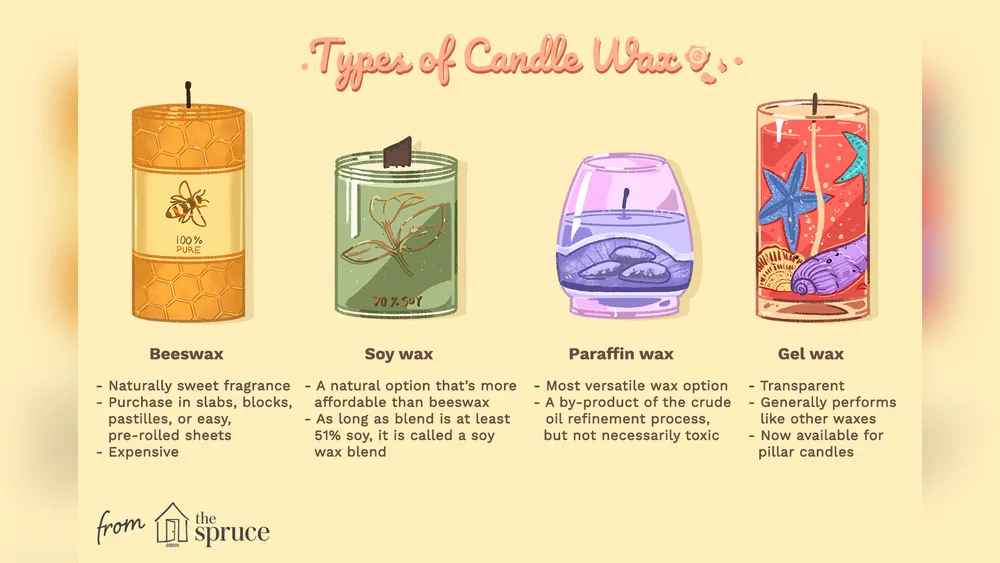
Paraffin Wax
Paraffin wax is the most common candle wax. It’s made from petroleum, so it’s not natural, but it’s cheap and flexible.
Advantages:
- Great scent throw
- Holds color well
- Easy to work with
- Wide temperature range
- Affordable
Disadvantages:
- Not eco-friendly
- Can produce soot
- Some people dislike the chemical smell
Typical uses: Scented candles, colored candles, pillar candles.
Paraffin is popular for beginners because it’s forgiving. You can make candles with vibrant colors and strong scents. However, concerns about its environmental impact and health effects have made people seek alternatives.
Soy Wax
Soy wax comes from soybeans. It’s natural, renewable, and biodegradable.
Advantages:
- Clean-burning (less soot)
- Renewable resource
- Good scent throw (but softer than paraffin)
- Easy to clean up
- Smooth appearance
Disadvantages:
- Softer texture (can melt in hot climates)
- May frost (white marks on candles)
- Scent throw is sometimes weaker
Typical uses: Container candles, jar candles, and eco-friendly candles.
Soy wax is a favorite among eco-conscious makers. It’s also popular for scented candles, but it needs the right wick and container to burn well.
Beeswax
Beeswax is made by bees. It’s natural, smells sweet, and burns slowly.
Advantages:
- Very clean burn (almost no soot)
- Natural honey scent
- Long burn time
- Hard and durable
- Hypoallergenic
Disadvantages:
- Expensive
- Limited color options
- Harder to scent (natural smell can overpower fragrances)
- Not vegan
Typical uses: Decorative candles, unscented candles, allergy-friendly candles.
Beeswax is a premium wax. It’s good for people with allergies, and its natural color is beautiful. If you want luxury candles, beeswax is worth considering.
Palm Wax
Palm wax is made from palm oil. It creates unique crystal patterns.
Advantages:
- Interesting texture (crystals or feather shapes)
- Good scent throw
- Hard and strong
Disadvantages:
- Environmental concerns (deforestation)
- Harder to find
- Can be tricky to work with
Typical uses: Decorative, textured candles.
Palm wax is mainly used for its look. If you want candles with unusual shapes or patterns, this is a great choice. Always check if the palm oil is sustainably sourced.
Coconut Wax
Coconut wax is newer. It’s made from coconut oil and sometimes blended with other waxes.
Advantages:
- Smooth finish
- Good scent throw
- Clean-burning
- Renewable resource
Disadvantages:
- Expensive
- Sometimes blended (not pure coconut)
- Limited data on long-term use
Typical uses: Premium container candles, eco-friendly candles.
Coconut wax is trendy for luxury candles. It’s gentle and clean, but the price is high. It’s often mixed with soy or other waxes for better results.
Other Waxes
Some makers use gel wax or blend waxes. Gel wax is used for transparent candles, but it’s a different material (made from mineral oil and resin) and not suitable for all projects. Blending waxes lets you customize burn time, scent, and appearance.
Wax Comparison: Burn Time, Scent, And Appearance
To make the best choice, compare the main waxes side by side. The table below shows how each wax performs on key features.
| Wax Type | Burn Time | Scent Throw | Appearance | Eco Impact | Cost |
|---|---|---|---|---|---|
| Paraffin | Medium | Strong | Vivid colors | Poor | Low |
| Soy | Medium-Long | Medium | Smooth, may frost | Good | Medium |
| Beeswax | Long | Weak-medium | Natural yellow | Excellent | High |
| Palm | Medium-Long | Medium | Crystal/feather effect | Variable | Medium |
| Coconut | Medium | Medium-strong | Smooth, white | Good | High |
How To Choose The Best Wax For Your Candle Project
Selecting the right wax depends on your priorities. Let’s break it down by common goals.
For Scented Candles
If you want a strong fragrance, paraffin wax is still the leader. It releases scent well and is affordable. However, soy wax offers a good alternative if you prefer a cleaner burn and less environmental impact. Mixing soy and paraffin can balance scent and eco-friendliness.
Pro Tip: Use a wax with a high fragrance load. This means it can hold more scent oil without problems. Paraffin holds up to 10%, soy up to 7%, and beeswax less.
For Eco-friendly Candles
Soy wax and beeswax are the top choices. Both are natural and biodegradable. Coconut wax is also good, but usually blended and more expensive. Always check for sustainable sourcing, especially for palm and soy.
Non-obvious Insight: Not all “soy wax” is pure. Some brands mix soy with paraffin to cut costs. Always check ingredients.
For Long-lasting Candles
Beeswax burns the longest. It’s hard, dense, and melts slowly. If you want candles that last, beeswax is ideal, but it costs more. Palm wax also burns slow and creates unique looks.
For Decorative Candles
If color and shape are your focus, paraffin wax is flexible. It holds color well and can be molded into many shapes. Palm wax creates interesting patterns. For textured, layered candles, palm wax is unmatched.
For Allergy-friendly Or Unscented Candles
Beeswax is hypoallergenic and burns very clean. It’s good for people with asthma or allergies. Unscented beeswax candles are popular for this reason.
For Beginners
Start with soy wax or paraffin wax. They are forgiving, easy to melt, and set well in containers. Beeswax and palm wax require more skill.
Candle Wax Data: Statistics And Market Trends
Candle wax is a big business. Let’s look at some numbers:
- The global candle market was valued at over $8 billion in 2022.
- Paraffin wax still dominates, making up about 60% of candles sold.
- Soy wax is growing fast, now about 15% of the market.
- The US imports most soy wax from Brazil and Argentina.
- Beeswax is produced mainly in China, Ethiopia, and Turkey.
Demand for natural waxes has increased by more than 30% in the last five years, driven by eco trends. Many consumers now look for soy, beeswax, and coconut wax candles.
Wax Melting Points And Candle Types
Different waxes melt at different temperatures. This affects how you make candles and how they burn.
| Wax Type | Melting Point (°F) | Best Candle Type |
|---|---|---|
| Paraffin | 120–160 | Pillar, votive, container |
| Soy | 120–130 | Container |
| Beeswax | 143–149 | Pillar, taper |
| Palm | 140–150 | Pillar, textured |
| Coconut | 100–120 | Container |
Non-obvious Insight: If you live in a hot climate, choose waxes with higher melting points. Soy wax candles can melt in summer without air conditioning.

Wax Blends: Customizing Your Candle
Many candle makers use blended waxes. Mixing waxes lets you change burn time, scent, and appearance.
Common blends:
- Soy-paraffin blend: Combines strong scent (paraffin) with clean burn (soy).
- Soy-coconut blend: Adds smoothness and improves scent throw.
- Beeswax-paraffin blend: Balances cost and burn quality.
Blending waxes is an art. You can experiment with ratios, but always test small batches. Some blends need special wicks or containers.
How To Blend Waxes
- Weigh each wax.
- Melt separately, then mix at the same temperature.
- Stir thoroughly for even distribution.
- Test burn to check quality.
Pro Tip: Always record your blend ratios and results. This helps you repeat successful candles.
Common Mistakes When Choosing Candle Wax
Many beginners make mistakes that waste time and money. Here are some to watch for:
- Choosing the wrong wax for the candle type: For example, using soft soy wax for pillar candles leads to melting and shape loss.
- Not checking for purity: Some “soy wax” is mixed with paraffin. This affects eco claims and burn quality.
- Ignoring melting point: Candles melt or lose shape in warm rooms if the wax is too soft.
- Using the wrong wick: Each wax needs the right wick size and material. Too small, and the candle tunnels; too big, and it smokes.
- Overloading fragrance: Too much scent oil makes candles greasy, causes uneven burning, or won’t set.
- Assuming all waxes are safe: Some waxes (like paraffin) can release harmful chemicals if burned incorrectly.
Non-obvious Insight: The container you use affects wax performance. Metal containers can overheat and cause tunneling. Glass is best for soy and coconut wax.
Practical Tips For Candle Makers
Whether you’re new or experienced, these tips can help:
- Always use a thermometer when melting wax. Overheating can ruin scent and color.
- For strong scent, add fragrance oil when wax cools to 160–180°F.
- Let candles cure for 24–48 hours before burning. This improves scent throw.
- If your candle frosts (white marks), try slower cooling or add additives.
- For colored candles, use wax-compatible dyes. Liquid dyes work best for soy and paraffin.
How Candle Wax Affects Scent Throw
Scent throw means how well a candle spreads its fragrance. Two kinds: cold throw (before burning) and hot throw (while burning).
Factors affecting scent throw:
- Wax type: Paraffin is best, soy is good, beeswax is weaker.
- Fragrance load: More oil means a stronger scent, but don’t overdo it.
- Wick size: Too small, weak scent; too big, burns too fast.
- Cure time: Let candles sit after pouring for the best scent.
Pro Tip: For a strong cold throw, use wax with high oil-holding capacity. For a strong, hot throw, use a wide wick and a proper wax blend.
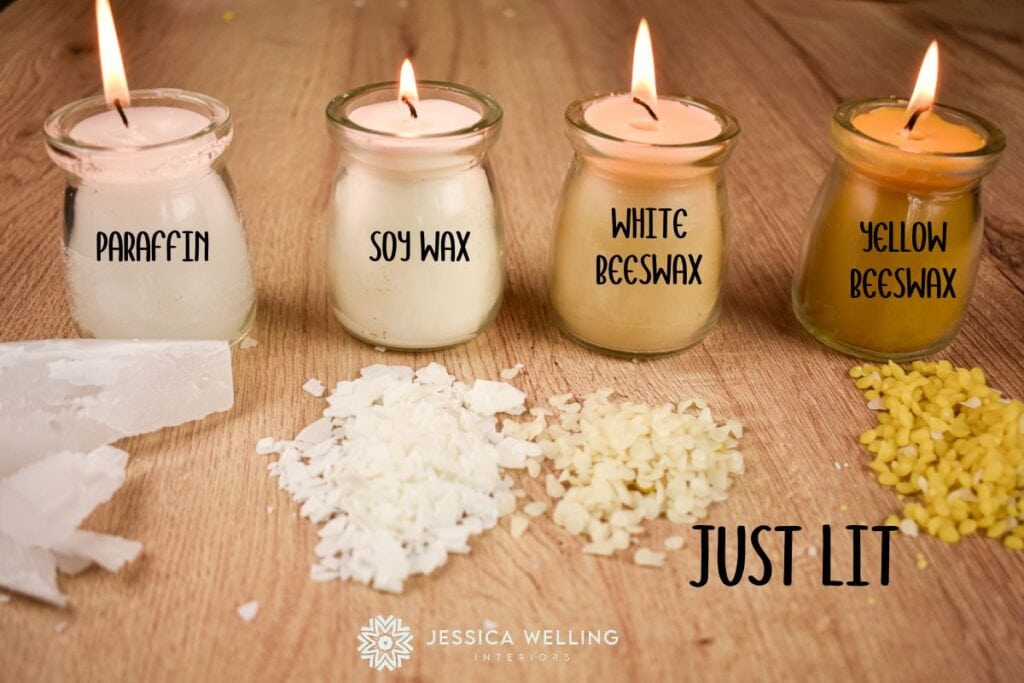
Environmental Impact: Sustainability And Ethics
Wax choice affects the environment. Here’s a brief overview:
- Paraffin wax: Made from petroleum, non-renewable, pollutes air when burned.
- Soy wax: Renewable but can cause deforestation if not sourced responsibly.
- Beeswax: Natural, supports bees, but not vegan.
- Palm wax: Can cause rainforest loss unless certified sustainable.
- Coconut wax: Renewable, but check for sustainable farming.
If you want to make eco-friendly candles, look for certified waxes (like RSPO for palm oil, USDA organic for soy).
Candle Wax Safety: What You Need To Know
Safety is often ignored. Some waxes produce soot or toxins if burned badly.
- Paraffin candles can produce benzene and toluene. Use proper wicks and ventilation.
- Soy, beeswax, and coconut candles are safer, but still need good wicks and containers.
- Never leave burning candles unattended.
- Avoid lead wicks (rare now, but still found in old supplies).
Non-obvious Insight: Not all wicks are cotton. Some contain metal. Always check wick composition for safety.
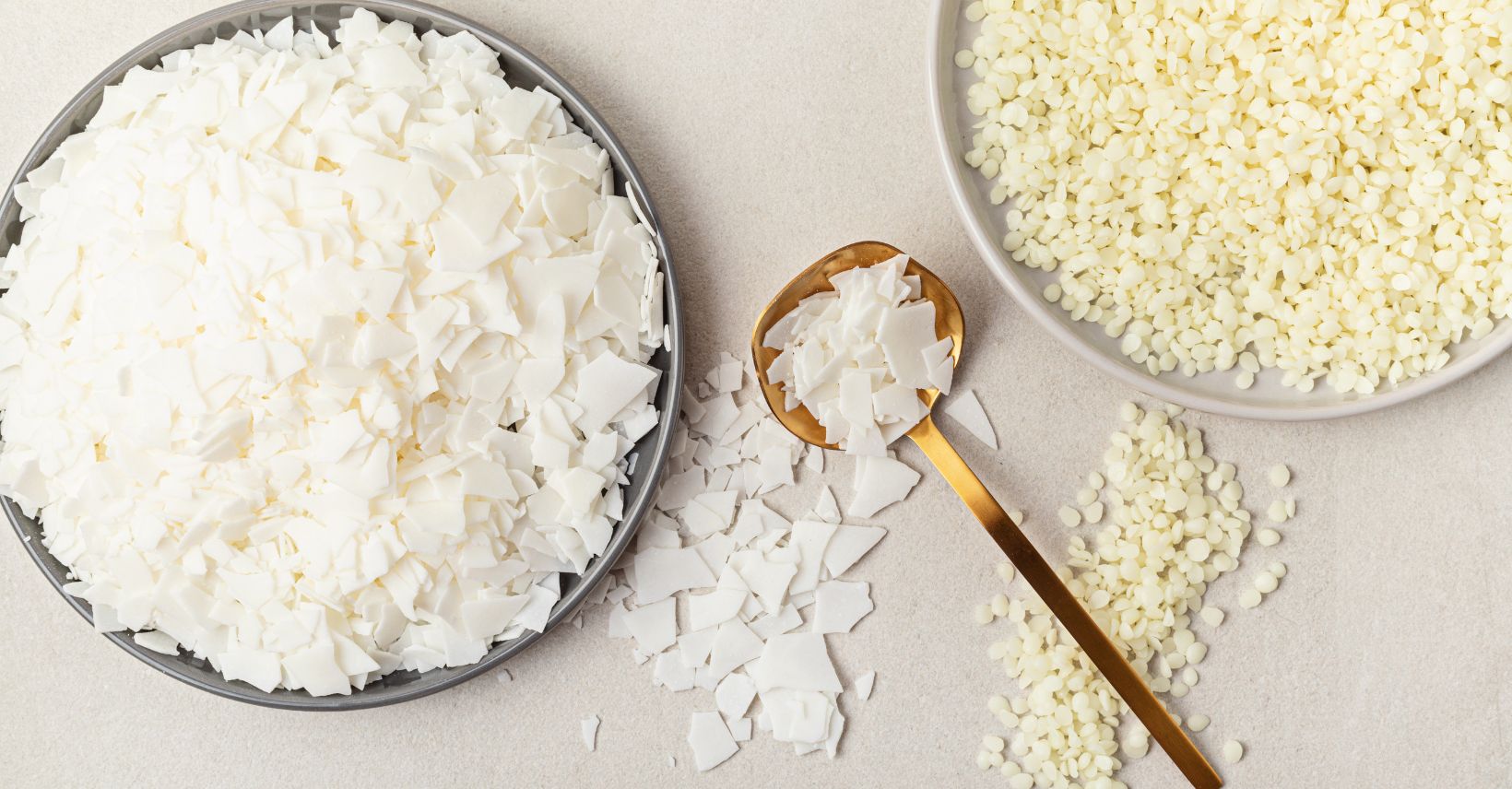
Candle Wax And Color: Making Bright, Beautiful Candles
Wax type affects how your candle looks. Paraffin holds color best, soy is softer (pastel shades), beeswax is natural yellow, palm wax creates patterns.
Tips:
- Use liquid dye for rich colors.
- For layered candles, let each layer cool before adding the next.
- Beeswax is hard to color due to its yellow base.
If you want vibrant colors, paraffin or palm wax is best. For natural looks, beeswax and soy.
Candle Wax For Commercial Makers Vs. Hobbyists
Commercial makers often use blends to maximize scent, color, and cost. Hobbyists can experiment more.
| Wax Type | Commercial Use | Hobby Use |
|---|---|---|
| Paraffin | Widely used for cost | Popular for experiments |
| Soy | Growing market | Eco-friendly projects |
| Beeswax | Luxury brands | Handmade, gifts |
| Palm | Decorative lines | Art candles |
| Coconut | High-end candles | Specialty projects |
Pro Tip: If you plan to sell candles, test your wax blends for shelf life, scent, and appearance.
Wax Storage And Shelf Life
Wax can spoil or lose quality over time. Proper storage is key.
- Keep wax in cool, dry places.
- Avoid sunlight (can fade color, spoil scent).
- Store in sealed bags or boxes.
- Most wax lasts 1–2 years if stored well.
Non-obvious Insight: Beeswax can develop a white “bloom.” This is natural and can be wiped off.
Final Thoughts: Which Wax Is Best?
There is no single “best” wax for candle making. The best wax depends on your goals:
- Want strong scent and color? Go with paraffin.
- Prefer eco-friendly? Choose soy or coconut.
- Need long burn time and luxury? Try beeswax.
- Like decorative patterns? Pick palm wax.
- Just starting? Use soy wax or paraffin wax.
Always consider your candle type, scent, color, and ethical values. Try different waxes, blend if needed, and test your candles before making large batches.
For more technical details and history on candle waxes, you can visit Wikipedia.
Frequently Asked Questions
What Is The Best Wax For Beginners?
Soy wax and paraffin wax are best for beginners. They are easy to melt, pour, and set. Soy is eco-friendly, and paraffin is affordable. Both work well for container candles, which are the easiest to make.
Which Wax Is Safest For Health?
Beeswax is considered the safest. It burns clean, produces almost no soot, and is hypoallergenic. Soy wax is also safe if sourced responsibly. Avoid burning paraffin candles in poorly ventilated rooms.
Can I Mix Different Waxes For Better Results?
Yes, blending waxes can improve burn time, scent, and appearance. Common blends include soy-paraffin and soy-coconut. Always test small batches before making larger quantities.
Why Does My Candle Have White Marks Or Frost?
This is called frosting and happens mostly with soy wax. It’s caused by natural crystal formation. To reduce frosting, pour wax at lower temperatures and cool candles slowly.
How Much Fragrance Oil Can I Add To My Wax?
Each wax has a fragrance load limit. Paraffin holds up to 10% fragrance oil, soy up to 7%, beeswax less (usually 3–5%). Adding too much oil causes poor burning and can make the candle greasy.
Choosing the right wax is the foundation of great candle making. Keep experimenting, stay safe, and enjoy the art of crafting beautiful candles.