Best Clock for Dementia, especially for those living with memory loss. It’s stressful when days blend together or important routines are forgotten.
Choosing a clock for dementia is not easy. Some models focus on clear displays, others speak the time out loud, and some offer reminders for medication. You might need louder volume or simple controls, but these features often come at the cost of complexity or price.
There’s also a balance between advanced options and ease of use, and not everyone needs the same things.
This article will help you understand what to look for and how to match a clock to your real needs.
What Matters Most When Choosing
For people with dementia, clarity and simplicity are key. Large displays, clear voices, and easy buttons can make a big difference. Some clocks add alarms or reminders, but too many features can confuse. Think about who will use the clock and which functions will truly help.
The products below highlight different strengths. Some are best for those who need spoken time, others for big numbers or reminders. Each option suits a different situation, so you can find what fits best.
Orka Talking Clock For Seniors
Best Clock for Dementia—ideal for seniors, visually impaired individuals, and anyone needing reliable medication reminders.

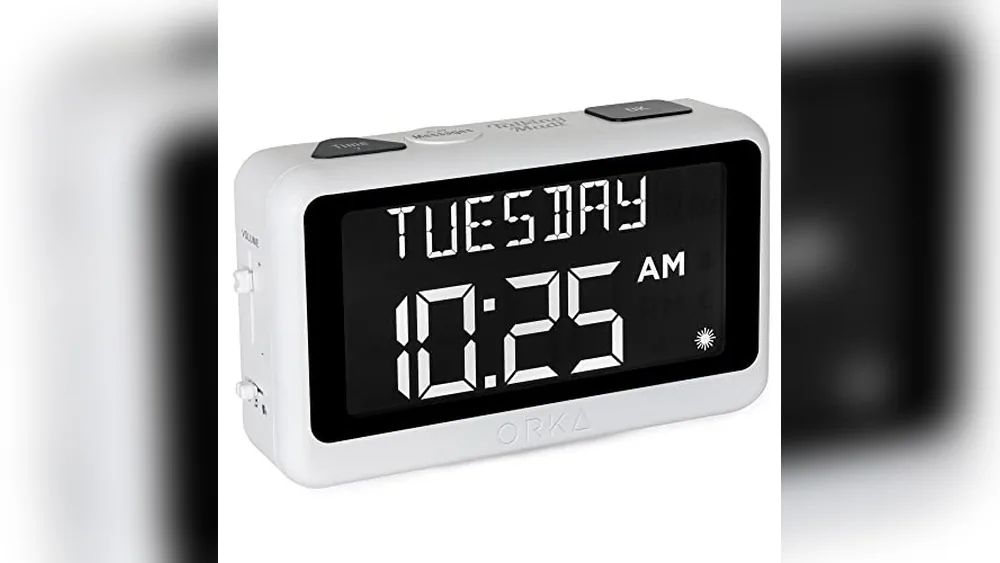
The ORKA Talking Clock is a thoughtfully designed digital day clock tailored for seniors, especially those living with dementia, hearing or vision impairments. Its oversized HD display and clear voice announcements make it easy to tell the time and day, helping users stay on track with daily routines and medication schedules.
The option to record personal alarm messages ensures reminders are meaningful and easy to recognize.
In daily use, this clock offers peace of mind through its loud, customizable alarms and accessible interface. The large buttons, multiple language support, and gentle alarm tunes contribute to a calm, reliable experience that builds confidence and independence. Setup may require assistance, but once ready, the clock quietly supports users without drawing attention to sensitive issues.
- Strengths:
- Extra-large digits and display for easy reading
- Recordable voice reminders for personalized alerts
- Loud, adjustable alarms (up to 90 decibels) for hearing impaired
- Supports six languages
- Gentle alarm tune instead of harsh sounds
- Designed to avoid sensitive wording on packaging
- Limitations:
- Requires AC power; not fully battery-operated
- Initial setup may need assistance for dementia sufferers
Who Will Benefit Most
This clock is perfect for seniors, caregivers, and families supporting loved ones with dementia, Alzheimer’s, or visual/hearing challenges. If medication reminders and clear time announcements are a daily struggle, the ORKA Talking Clock provides gentle structure and reassurance. Those who prefer battery-powered devices might want to look elsewhere, but anyone needing reliable, personalized reminders will find this clock invaluable.
To make the most of this clock, record clear, familiar messages for alarms and place it in a highly visible spot. Once set up, you can trust it to help loved ones maintain independence and reduce anxiety about missed doses or appointments.
The thoughtful design eases daily stress—giving users and caregivers one less thing to worry about.
Top Life Talking Clock For Seniors
As one of the Best Clock for Dementia, this talking clock is ideal for seniors, those with visual or hearing impairments, or anyone needing a simple, accessible way to keep track of time.
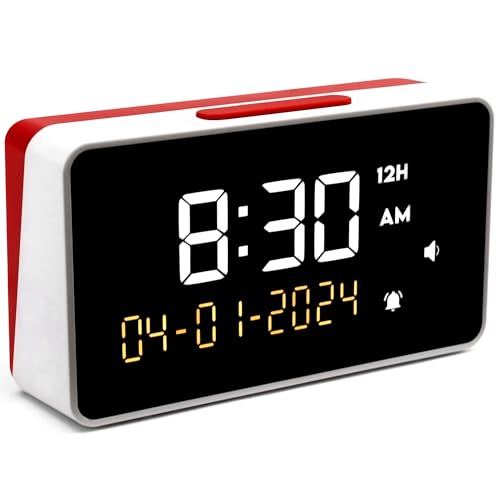
The Top Life Talking Clock offers a straightforward way to access the time, day, and date at the press of a single button. Designed specifically for those with dementia, Alzheimer’s, or visual and hearing impairments, it helps eliminate the confusion of reading traditional clocks and ensures clarity with its extra loud voice feature.
Using this clock feels effortless—just press the top button and a clear, neutral male voice speaks the exact time. Press again for the day and date. There’s no need to squint at small numbers or struggle with complicated settings, making it especially comforting for elderly family members or anyone who prefers things simple and reliable.
- Strengths:
- Very loud (85 dB) speaking function for hearing-impaired users
- Screen can be switched off to avoid sleep disruption
- One-button operation—no confusing menus
- Large, high-contrast display for easy reading
- Can run on batteries or AC power
- Potential limitations:
- Not suitable for users who prefer visual-only clocks
- Batteries not included
Is This The Right Clock For You?
If you’re caring for someone with dementia, significant vision loss, or hearing challenges, this clock could make daily routines less stressful and support independence. Those who struggle with small digital clocks, or are easily disturbed by nighttime lights, will appreciate the simple audio function and dark mode.
However, if you or your loved one prefer a silent, visual-only clock or need multilingual support, you might want to look elsewhere. For most, the Top Life Talking Clock reduces worry and confusion, especially at night or during early mornings. Tip: Place it somewhere easy to reach—like a bedside table—so time checks are always within arm’s reach. You can feel confident this clock was built with real accessibility needs in mind.
Cirbic Extra Large Talking Button Clock
The Best Clock for Dementia: This accessible talking clock is ideal for seniors, the visually impaired, or anyone who needs a simple, reliable time-telling solution.

The Cirbic Extra Large Talking Button Clock is a straightforward, high-contrast timepiece designed specifically for people living with dementia, low vision, or hearing challenges. By pressing its large, easy-to-find blue button, users can hear the current time or date spoken aloud in a clear North American English male voice, making it extremely accessible for those who struggle with traditional clocks.
In daily life, this clock offers peace of mind and independence—there’s no need to fumble with small buttons or decipher complicated displays. With simple audio instructions and a straightforward alarm feature, it can provide gentle reminders or wake-ups, and its tactile design means it remains usable even when eyesight is an issue.
For caregivers, knowing that loved ones can check the time on their own can be a genuine relief.
- Strengths:
- Single, extra-large button for effortless operation
- High-contrast color and clear voice output
- Audio feedback for both time and date
- Volume control (high and low settings)
- Simple alarm with easy setup
- Limitations:
- Requires three AAA batteries (not included)
- No visual time display for those who prefer to see the time
Is This The Right Clock For Your Needs?
If you’re caring for someone with dementia, low vision, or anyone who finds standard clocks confusing or inaccessible, the Cirbic Extra Large Talking Button Clock is a thoughtful choice. It removes the stress of reading small numbers or remembering digital interfaces, and the simplicity of a single-button operation means there’s little risk of confusion or accidental resets.
However, if you or your loved one prefer a visual display or need a clock with additional calendar functions, you might want to consider another option. For best results, place the clock in a familiar location within easy reach, and keep spare batteries handy to avoid interruptions.
Rest assured, this clock is designed to make daily routines easier and restore a sense of independence where it matters most.
How To Compare Talking Clocks For Seniors And Dementia
Consider how the clock will fit into your daily routine, not just its features. Some models offer simple one-button operation, while others provide multiple alarms and voice customization. Think about the trade-off between ease of use and advanced options. Decide if you need portability or prefer a stationary, plug-in device.
Choose based on who will use it and how much support they may need for setup.
Common Pitfalls And Who Should Look Elsewhere
- Expecting a talking clock to solve all memory or medication challenges.
- Buying for someone who cannot operate basic buttons or follow audio prompts.
- Assuming all models are battery-powered or portable.
- Wanting a device with complex scheduling or remote app control—these are basic clocks.
- If visual display is crucial, some clocks may not offer high-contrast screens.
Best Clock For Dementia: Frequently Asked Questions
Are Talking Clocks Easy For Seniors With Memory Loss To Set Up?
Most models require basic button presses and audio instructions. Some may need assistance during initial setup, especially for custom alarms.
Do These Clocks Work During Power Outages?
Some clocks use batteries as backup to retain settings, but may not announce time unless powered. Check if battery operation meets your needs.
Is The Spoken Voice Clear Enough For Hard-of-Hearing Users?
Volume varies by model, with some reaching 85–90 decibels. It helps to test volume settings in the intended environment.
Can I Use These Clocks In Different Languages?
A few models offer multiple languages. Always confirm language support before purchasing if this is important.
Are The Alarms Loud Enough To Wake Heavy Sleepers?
Alarm volume is generally high but may not match traditional loud alarm clocks. Consider alarm type and maximum volume for your needs.
Will The Clock Disturb Sleep With Its Display?
Some clocks allow the screen to be turned off while retaining full voice functionality. This is helpful for sensitive sleepers.
What Happens If The Person Forgets How To Use The Clock?
Simple designs with one-button operation are easier for users with cognitive challenges. Caregivers may need to offer periodic reminders or support.
Settling Your Choice: Finding The Right Fit For Daily Life
It’s normal to feel uncertain when choosing for someone with special needs. Focus on matching the clock’s simplicity and features to the user’s abilities and living situation. Small differences can make daily life easier or harder, so trust your understanding of the person’s habits.
There’s no perfect solution for everyone, but thoughtful selection helps the clock become a quiet, steady aid. Take your time, and you’ll find a model that fits comfortably into your routine.