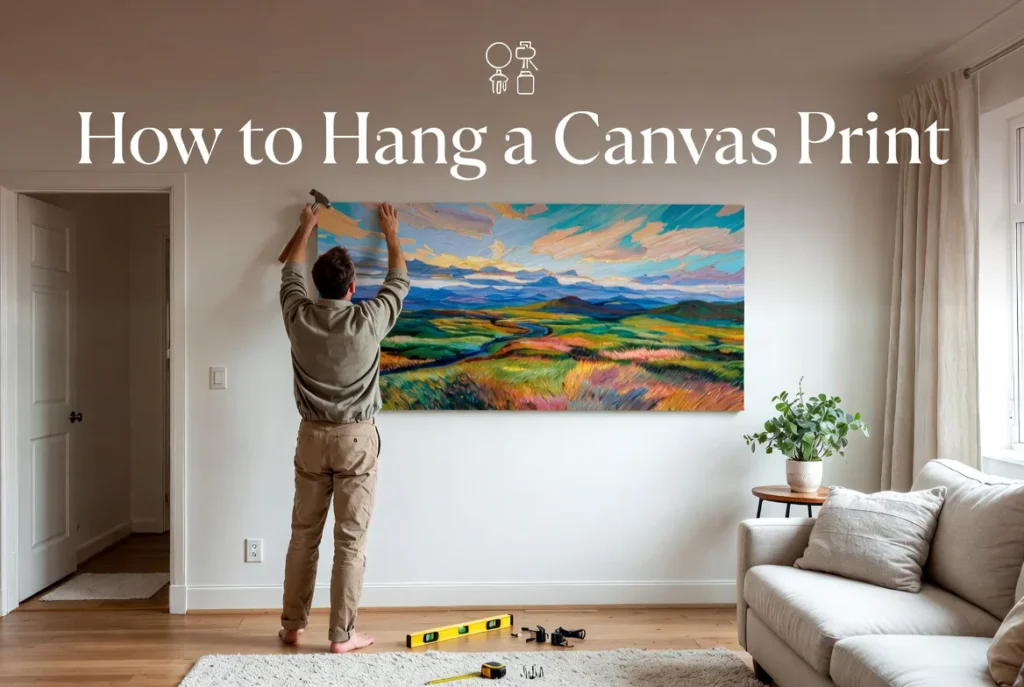
How to Hang a Canvas Print: The Ultimate Step-by-Step Guide to a Pro Look
Hanging a canvas print up with just a hammer and a nail may seem simple enough. But if you’ve ever been left with a wonky piece of art, holes in your wall that don’t match up or, worse, a print that falls and ruins itself or your floor, you know there’s more to it. A beautifully hung canvas print can transform a room, bringing personality, colour and warmth. If you’re decorating your first flat, need to refresh your living room or want to create a gallery wall in your home office, getting it right is important.
This complete guide will walk you through everything you need to know. We’ll cover tools and materials, different methods for hanging canvases on different types of walls and sizes, precise measuring techniques, installation procedures, how to troubleshoot common problems, and advanced tips for a flawless job. By the time you’re finished, you’ll be able to hang your canvas prints like a pro. So let’s get into it. Here’s a post full of practical tips for getting your walls looking great without the aches.
The Importance of Hanging Right
Canvas prints are a popular choice because they are lightweight, colourful, and often cheaper than traditional framed art. But they have to be handled with care. Unlike framed glass art, canvases can warp, sag or be damaged if not hung properly. The right way will prevent your artwork from tilting over time, protect your walls (especially in rentals), and keep the print tight for years to come.
Consider the psychology of it, too: art that is hung at the wrong height or angle can feel off, disrupting the flow of a room. If it’s placed correctly, it creates balance, draws the eye, and makes your space feel intentional and polished. Studies in interior design show that art can even lift mood and a home’s perceived value when displayed well. So it’s definitely worth your while to learn how to hang a canvas print.
Collecting Your Tools and Materials
Get everything you’ll need before you pick up a hammer. Having the right supplies will save you from frustration mid-project.
Basic Tools:
- Precision tape measure or laser distance measure
- Pencil, marking
- Use a level (bubble or digital) to check straightness.
- Hammer.
- Drill and proper bits (For heavier setups or masonry walls)
- Screwdriver
- Templates from painter’s tape
Hardware options:
- Picture hooks or nails rated for the weight of your canvas
- Hangers, serrated
- D-rings or eye-screws and wire
- Plasterboard or plaster wall anchors
- no-damage options Command strips or sticky hooks
Safety and security:
- Gloves for the painting
- Felt Pads or Back Corner Bumpers
- Stud finder to locate supports in wall
If you’re hanging larger, heavier prints (over 20-30 pounds), you’ll want to check out professional-grade hardware. Always check the weight of your canvas. Most have specs from the printer.

Selecting the Best Location and Height
Location is key. Think about lighting – no direct sunlight that will fade things. Think of the traffic flow and don’t be in the way of people bumping into it. Centred over sofas or consoles in living rooms. In a bedroom, eye level from the bed is a good pick. Gallery walls require planning for visual balance.
The golden rule for height is the following: Hang the canvas so its centre is at eye level, about 57 to 60 inches off the floor. That’s true for most viewers. Space groupings evenly, keeping pieces 2 to 3 inches apart. Use painter’s tape on the wall to mock up layouts before committing.
If you have high ceilings or large spaces, you can go a little higher, but always take a step back and look from where people will most see it. In dining rooms, lower placement encourages intimacy. Make sure to measure a couple of times – a little extra effort now will prevent the need to repaint those walls later.
Knowing Your Canvas Type
There are two styles of canvas prints. Gallery-wrapped prints (stapled on the back, ready to hang) and canvas prints with a traditional frame or backing. Gallery-wrapped ones are the most common and can be hung as is or with added hardware. Thinner canvases may require some additional support to avoid warping.
Check the back: You should find pre-installed hangers. If none, you’ll add them. For stability consider two or more hanging points for very large pieces (>40 inches). Changes in temperature and humidity can affect canvas, so keep it away from bathrooms or near heat vents.
Method 1: Old School Nail or Hook Hanger (Best for Light to Medium Canvases)
This is the traditional way. Great for prints up to 20-25 lbs.
Steps for:
- For the most secure option, if you can, use a stud finder to locate the wall stud.
- Measure and mark the location. For one hook, mark where the top of the canvas will sit, then subtract the distance from the top of the canvas to the hanging point.
- Install hook Hammer in a picture hook or use a screw with an anchor.
- Hang and level: hang the canvas, put the level on top, adjust.
For wider canvases, two evenly spaced hooks will stabilise.
Method 2: Sawtooth Hangers.
Sawtooth hangers are a secure, flush mount and work great for medium weight prints.

On canvas:
- Position the hanger at the centre of the top wooden bar.
- Screw or nail it down (hardware provided).
- Hammer a nail or place a hook at the marked spot. The saw tooth holds the nail firm.
That way you minimise tilting. Reinforce heavier canvases with multiple sawteeth or combine with wire.
Method 3: Wire & D-Rings (Professional Gallery Style)
Best for larger or heavier items Easy to adjust.
Steps for:
- Screw D rings or eye screws to each side of the frame about 1/3 of the way down from the top. Don’t bet too high or too low.
- Thread the wire through, leaving a little slack, but not too much (2 to 3 inches less than the width).
- wire ends twisted tightly.
- Hang on two wall hooks for stability.
This distributes the weight equally and keeps the canvas flush against the wall.
Method 4: Choices for Tenants Without Damage
Command strips, adhesive hooks, or French cleats with tape are lifesavers.
- Wipe down the wall with alcohol.
- Apply strips as directed. Wait for the recommended time (usually 1 hour)
- Use multiple strips rated for the weight for heavier pieces.
- They are velcro style systems and can be removed without residue.
They hold surprisingly well, but check weight limits and reapply in high humidity conditions.
Installation instructions – step by step
So let’s look at a complete walkthrough of a typical gallery-wrapped canvas.
Preparation (10-15mins):
- Open carefully. Check for damage.
- Place the canvas face down on a clean surface.
- Choose hardware by size/weight.
- Find your wall space and clear it away.
Measurement and Marking (It’s All About Accuracy) Follow the “measure twice, cut once” mantra. Find the exact centre. For example, if it’s hanging above a sofa, measure 8-12 inches above the furniture. Mark lightly in pencil. Use painter’s tape to create a visual template of how big the canvas is.
Hardware Installation: Choose and run the procedure. Anchors are required for plasterboard to prevent pullout. Drill pilot holes if necessary. Use brick or concrete masonry anchor bits.
Hanging the Canvas: Lift big pieces with two people. Hook it on and check the levels in both directions. Make small adjustments. Add bumpers on lower corners to prevent marks on walls and swaying.
Last Checks: Take a step back from different points of view Try different lighting. Pull gently to check that it is safe. Wipe away any marks with a soft cloth.
When done right, this process takes 20-45 minutes per piece but results in years of enjoyment.
Hanging gallery walls & multi piece sets
Gallery walls are dramatic, but they do take planning. Use paper templates on the wall. Space 2 to 3 inches apart. Different sizes for interest, but keep a common theme. Laser levels are some of the tools used to align rows. For canvas sets, start with the middle one and work outwards.
Tips for Different Types of Walls
- Plasterboard. Anything over a few pounds needs anchors, standard.
- Plaster: Old houses — be careful, use speciality anchors.
- Brick/Concrete: Masonry hardware is required.
- Wood Panelling Screws are fine.
- Textured Walls: Adhesives might not stick well; use nails.
If in doubt, always test a small area.
Mistakes and How to Avoid Them
- Eyeball it: Always measure. Crooked art is the No. 1 complaint.
- Wrong height: Too high, often a mistake – stay at eye level.
- Not enough hardware: Don’t skimp on weight ratings.
- Ignore level: Use a tool each time.
- Poor lighting/viewing: Check in real conditions.
- Not using bumpers: Can result in wall damage and shifting.
- Hanging alone for large pieces: Help with drops.
Other pitfalls are over-tight wire (this causes bowing) or placement near heat sources.
How to Care for Your Hung Canvas Print
Up and maintain it: Gently brush with a soft brush. Keep out of direct sunlight. For very damp areas , silica packs can be used for humidity control . Check the tightness of the hardware periodically, especially in areas subject to earthquakes. If re-positioned, remove with care and store flat or wrapped.
Progressive Methods and Inventive Concepts
- Use offset clips or spacers for floating effect
- LED backlighting: For a contemporary look.
- Seasonal rotations Simple with modular systems.
- Outdoor canvases: Make use of weatherproof hardware.
- Professional Installation: For very large or valuable art.
Try asymmetrical groupings or mix with other media for eclectic vibes.
FAQs On Hanging Canvas Prints
What is the weight of a canvas print? Most of the standard ones are light, but check.
Can you hang without tools? Yes, adhesive methods, but better for security tools.
What is the best way for a bathroom? Try to avoid moisture; if necessary, use sealed canvases and strong anchors.
How do I hang things without nails in rentals? Or command products or over the door hooks.
My canvas is sagging – help? Tighten the wire or add cross braces to the back.
And many more. Do some research on specifics for your setup.
Conclusion: Have fun with your new wall art
Hanging a canvas print is a rewarding do-it-yourself project that can transform a room. With the right tools, careful measurements and the right technique you can get results that look like they belong in a gallery. Remember: preparation prevents poor performance. Measure, measure, measure. Use good hardware. Step back and admire what you have done. Your walls will thank you for it and your guests will too.
Now go hang that nice print! Leave your results in the comments below, or tag us on social media . More home decor tips: See our other guides to framing, gallery walls and interior styling.