
How To Organize Bedroom Furniture: A Simple Guide
Arranging your bedroom furniture can feel difficult. But with a few simple steps, you can create a comfortable and beautiful room. Whether your bedroom is small or large, you can follow these tips to arrange your furniture the right way. This guide will help you choose the best layout and make your bedroom feel relaxing.
1. Start with a Plan
Before you move any furniture, it’s important to have a plan. Think about how you use your bedroom and what is important to you. Do you need more space to walk around? Do you want your bed to be the focus of the room? Having a plan will make the process easier and quicker.
Measure Your Room
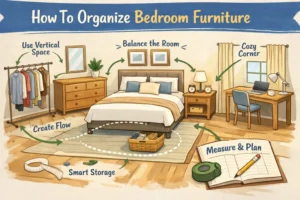
Start by measuring your bedroom. Write down the length and width of the room. This will help you know how much space you have. You also need to measure your furniture. Knowing the size of your bed, dresser, and other items will help you choose the best layout.
Think About the Function
What do you do in your bedroom? Do you spend a lot of time reading or watching TV? If so, think about where to place your bed and other furniture for comfort. If you need space to work, consider adding a desk or chair. Plan your layout around how you use the room every day.
2. Position the Bed
The bed is the most important piece of furniture in your bedroom. It should be the focus of the room. You want it to be in a place that is comfortable and easy to access. Here are some tips for positioning the bed:
Center the Bed on a Wall
In most bedrooms, the best place for the bed is against the longest wall. If possible, center the bed on this wall. This creates balance in the room. It also makes the bed feel like the main feature.
Avoid Placing the Bed Under Windows
It is not a good idea to place the bed directly under a window. This can make the room feel uncomfortable, and you might get cold or too much light at night. Try to place the bed against a wall that does not have windows.
Leave Space on Both Sides
Make sure you leave space on both sides of the bed. This allows you to easily get in and out of bed. It also gives space for nightstands or lamps. Try to keep at least 2 feet (60 cm) of space on each side of the bed.
Consider the View
Think about what you see when you wake up. Placing your bed to face the door is a good idea. It helps you feel safe and in control. If possible, try to avoid placing the bed with your feet pointing directly at the door.
3. Arrange Other Furniture
Once your bed is in the right place, it’s time to arrange the other furniture. Here are some tips for the rest of the room:
Nightstands
Nightstands are small tables that go next to your bed. They are useful for placing lamps, clocks, or books. Nightstands should be easy to reach from the bed. Keep them close, but not too close. A good rule is to place them about 1 to 2 feet (30 to 60 cm) from the bed.
Dressers and Wardrobes
Dressers and wardrobes are important in the bedroom. They store your clothes and help keep the room tidy. Place these furniture pieces against walls to save space. You can put them near the bed or on the opposite wall. Avoid placing a dresser in front of the window because it can block the light.
Chairs or Seating
If you have space, consider adding a chair or seating area to your bedroom. This can be a cozy spot for reading, relaxing, or putting on shoes. If you have a larger room, you can place a chair near the bed or in a corner. For smaller rooms, choose a small chair that does not take up too much space.
Mirrors
Mirrors can make a room feel bigger and brighter. Consider adding a mirror to your bedroom, but be careful about where you place it. Avoid putting mirrors directly across from the bed. This can feel strange and may make it hard to relax. Place mirrors on the wall near the door or in a corner where they do not reflect the bed.
Lighting
Lighting is very important in the bedroom. Good lighting helps create a relaxing atmosphere. Use a mix of lights, such as ceiling lights, lamps, and wall lights. Place a lamp on each nightstand to make reading or relaxing in bed easy. You can also add soft, warm lighting to create a cozy vibe.
4. Create Space to Walk Around
One of the most important things to think about when arranging bedroom furniture is how much space you have to walk around. You want to make sure that there is enough room to move freely. Avoid crowding the room with too much furniture.
Leave Room to Move
Try to leave at least 2 to 3 feet (60 to 90 cm) of space around the bed. This makes it easier to walk around. It also gives the room a more open feel. When arranging furniture, think about the flow of the room. Make sure there are clear paths to walk from one side to the other.
Avoid Overcrowding
It’s easy to want to add lots of furniture, but too many pieces can make the room feel small. Focus on the furniture that you use most, like your bed, nightstands, and dresser. If you have extra space, you can add smaller items like a chair or a small table.
5. Add Personal Touches
Once your furniture is arranged, you can start adding personal touches to make the room feel like your own. Here are some ideas:
Bedding
Choose bedding that is comfortable and matches your style. A cozy blanket or soft sheets can make your bed feel more inviting. You can also add pillows in different colors or textures to give your bed a nice look.
Wall Art and Decorations
Hang some art on the walls to give the room character. Choose art that makes you feel happy and relaxed. You can also add decorations like plants, candles, or photos. Just be careful not to add too many items, as it can make the room feel crowded.
Rugs
A rug can add warmth and texture to the room. Place a rug next to the bed or in the center of the room. Make sure the rug is large enough to cover a good area of the floor, but not so large that it covers the entire room.
Curtains or Blinds
Curtains or blinds can help control the light in your room. Choose curtains that match your bedroom’s style. If you want to block light at night, choose thick curtains. If you want more natural light during the day, choose light or sheer curtains.
6. Keep the Room Tidy
Once your bedroom is arranged, it’s important to keep it tidy. A clean room will help you relax and sleep better. Here are some simple tips to keep your room organized:
Declutter Regularly
Take time to clean your bedroom and get rid of things you no longer need. This will help create more space and keep the room looking fresh. Try to make your bed every day. This simple step can make a big difference in how your room looks.
Organize Your Clothes
Keep your clothes organized in your dresser or wardrobe. Use baskets or boxes for small items like shoes, scarves, or hats. This will help keep your room neat and make it easier to find what you need.
Store Items Under the Bed
If you have extra things that you don’t need every day, consider storing them under your bed. Use storage bins or boxes to keep things out of sight. This can help free up space in the room and keep it looking tidy.
7. Consider Your Style
Finally, make sure that your bedroom reflects your personal style. Choose furniture and decorations that you love. If you like a minimalist style, choose simple furniture and neutral colors. If you like a more colorful room, you can use bright pillows or blankets. Your bedroom should feel comfortable and inviting to you.
Conclusion
Arranging bedroom furniture doesn’t have to be hard. Start by planning where you want to put the bed and other furniture. Make sure there’s enough space to move around and that everything is easy to reach. Add personal touches like rugs, curtains, and art to make the room feel like your own. Keep the room tidy and organized to make it more comfortable and relaxing. With these simple tips, you can create a beautiful and functional bedroom.