what is the best wood for outdoor furniture makes a huge difference. It affects not only how your space looks, but also how long your furniture lasts, how much care it needs, and even how comfortable it feels on a hot or rainy day.
With so many options—wood, metal, plastic, and more—the decision can feel overwhelming. Whether you want a cozy patio, a dining area for summer parties, or just a quiet spot in the garden, picking the best material is the key to enjoying your outdoor space year after year.
Many people rush to buy furniture that looks good in the store, only to see it fade, rust, or crack after one season outside. Others spend more than needed because they think only expensive materials last. The truth is, every material comes with its own strengths, weaknesses, and maintenance needs.
Knowing what to expect helps you make a smart choice that fits your climate, lifestyle, and budget.
Let’s explore the most popular materials for outdoor furniture. You’ll find out how they handle sun, rain, cold, and daily use. You’ll also see the hidden details—like how some woods can last decades, or why certain plastics work better in hot climates.
By the end, you’ll have the confidence to choose furniture that suits your outdoor life, looks great, and stands up to the elements.
Wood: Natural Beauty With Unique Challenges
Wood is a classic choice for outdoor furniture. It brings warmth, a natural look, and a solid feel to gardens, patios, and balconies. However, not all woods are equal when it comes to outdoor use.
Popular Woods For Outdoor Furniture
- Teak: Famous for its durability, teak is often called the “gold standard” for outdoor furniture. It contains natural oils that help resist water, insects, and rot. With care, teak furniture can last 20 years or more, even in harsh weather.
- Eucalyptus: Slightly less expensive than teak, eucalyptus also holds up well outdoors. It is dense and naturally oily, but needs regular sealing to maintain its color and strength.
- Acacia: This fast-growing wood is popular for its rich color and lower cost. Acacia is hard and strong, but it is more sensitive to moisture and may crack if not protected with oil or sealant.
- Cedar: Lightweight and aromatic, cedar resists insects and decay. It is softer than teak or eucalyptus, so it can scratch or dent more easily. Cedar weathers to a silver-gray unless regularly treated.
- Shorea: Less known but very durable, shorea is similar to teak but usually more affordable. It is dense, resists rot, and can last many years with proper care.
Pros Of Wood
- Natural, timeless appearance
- Comfortable even in hot or cold weather
- Can be sanded and refinished
- Sturdy and strong
Cons Of Wood
- Needs regular maintenance (sealing, oiling, or painting)
- Can fade, crack, or warp without protection
- Susceptible to insects if untreated
- Heavier types are hard to move
Typical Lifespan
High-quality wooden furniture like teak can last 20-30 years. Softer or less dense woods may last 5-10 years outdoors, depending on care.
Maintenance Tips
- Clean with mild soap and water
- Oil or seal yearly to protect color and surface
- Cover or store inside during harsh winter months
Non-obvious Insight
Many people think all wood is eco-friendly, but the source matters. Look for FSC-certified wood to make sure it comes from responsibly managed forests.
Metal: Strong, Stylish, And Modern
Metal furniture has become popular for its sleek look and durability. You’ll find everything from vintage wrought iron benches to modern aluminum dining sets. Each metal type offers unique benefits and drawbacks.
Types Of Metal Used Outdoors
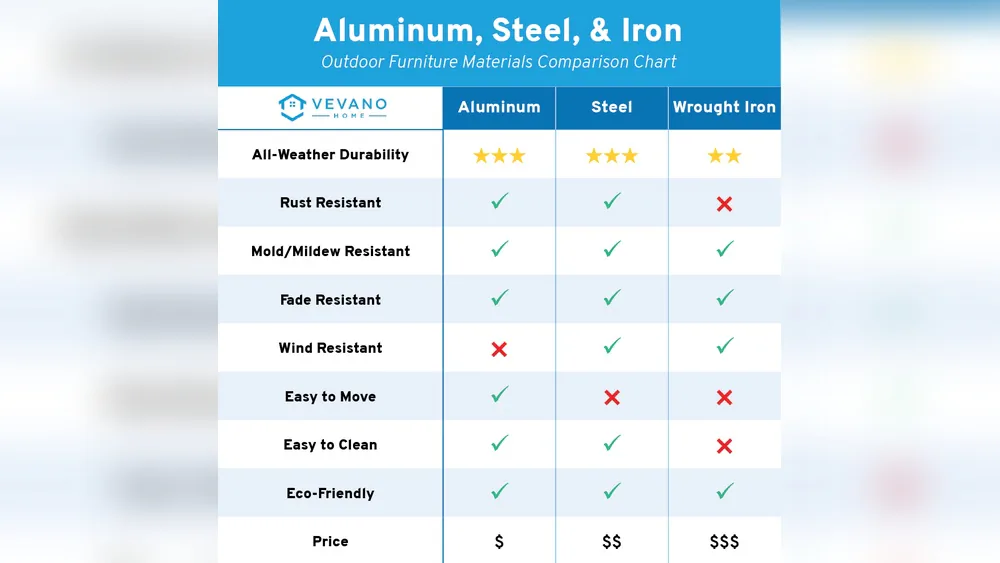
- Aluminum: Lightweight, rust-resistant, and easy to move, aluminum is a top choice for patios and decks. It doesn’t need much care and can be left outside all year in most climates.
- Stainless Steel: Known for its strength, stainless steel resists rust and corrosion. It is heavier than aluminum and usually more expensive, but very stable in windy areas.
- Wrought Iron: Classic and decorative, wrought iron is heavy and extremely strong. It needs regular painting or sealing to avoid rust, especially in rainy or coastal areas.
- Powder-Coated Steel: This steel is coated with a protective layer, making it more weather-resistant. It is less expensive than stainless steel but still requires care to prevent rust.
Pros Of Metal
- Very durable and strong
- Can create both modern and classic styles
- Often easy to clean
- With cushions, can be very comfortable
Cons Of Metal
- Can get very hot or cold depending on the weather
- Needs cushions for comfort
- Some metals rust if not protected
- Heavy metals are hard to move
Comparative Metal Properties
Here’s a quick comparison of key factors for the main outdoor metals:
| Metal Type | Rust Resistance | Weight | Maintenance | Average Lifespan |
|---|---|---|---|---|
| Aluminum | Excellent | Light | Low | 15-20 years |
| Stainless Steel | Very Good | Heavy | Low | 20+ years |
| Wrought Iron | Poor (needs paint) | Very Heavy | High | 15-25 years |
| Powder-Coated Steel | Good | Medium | Medium | 10-15 years |
Extra Advice
If you live near the ocean, salt air can quickly rust most metals. In these areas, aluminum or stainless steel are the best bets.
Plastic And Resin: Budget-friendly And Low Maintenance
Plastic and resin furniture has improved a lot in recent years. Today, you’ll find stylish, sturdy pieces that cost much less than wood or metal. There are several types to consider.
Types Of Outdoor Plastics
- Polypropylene and Polyethylene: These common plastics are light, affordable, and can be molded into many shapes and colors. Polyethylene is especially good for outdoor use due to its UV resistance.
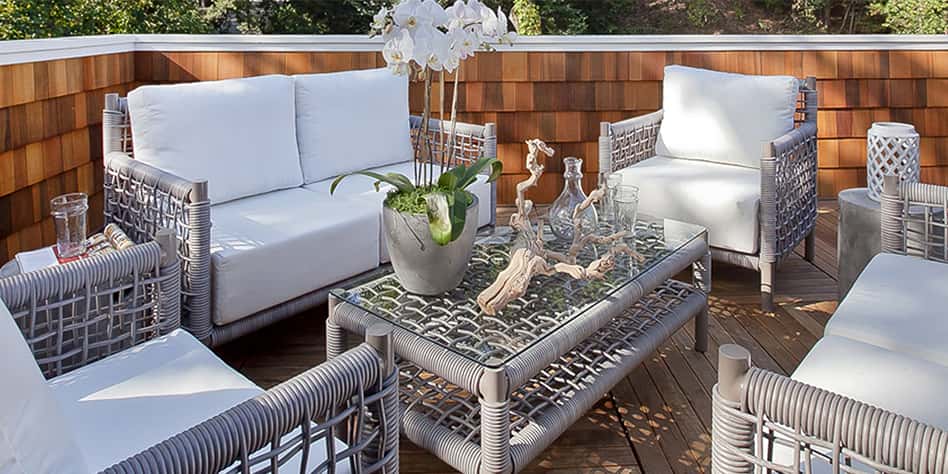
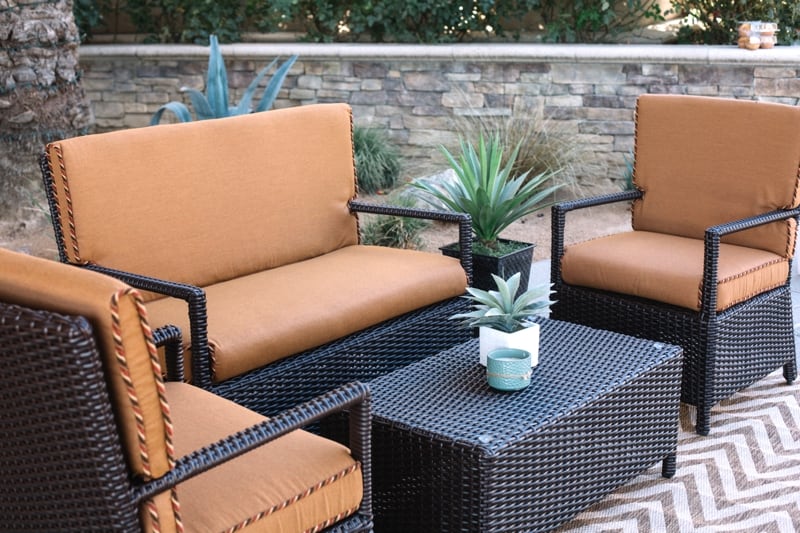
- Resin Wicker (All-Weather Wicker): Looks like natural wicker but is actually made from synthetic fibers woven over a frame. It is weather-resistant, lightweight, and can handle both sun and rain.
- Recycled Plastic (HDPE): Made from recycled materials, HDPE is strong, eco-friendly, and often looks like painted wood. It resists cracking, fading, and mold.
Pros Of Plastic And Resin
- Very low maintenance
- Lightweight and easy to move
- Water and UV resistant (if good quality)
- Many color and style options
- Usually less expensive
Cons Of Plastic And Resin
- Cheaper plastics can crack or fade in strong sun
- May look less “natural” than wood
- Lightweight pieces might blow away in wind
- Some types feel less sturdy
How Plastic Furniture Handles The Elements
Plastic and resin can stand up to rain and sun, but not all are equal. HDPE and high-quality resins last much longer than basic plastic chairs. Cheaper plastics may turn brittle after a few years, especially in hot, sunny climates.
Data Table: Plastic & Resin Features
| Material | UV Resistance | Weight | Maintenance | Eco-Friendliness |
|---|---|---|---|---|
| Polypropylene | Good | Very Light | Very Low | Low |
| Resin Wicker | Excellent | Light | Low | Medium |
| HDPE (Recycled Plastic) | Excellent | Medium | Very Low | High |
Non-obvious Insight
Many people don’t realize that quality plastic furniture can be heavier and more durable than cheap wood or metal sets. Look for brands using thick, UV-stabilized plastic if you want long-lasting value.
Wicker: Tradition Meets Technology
Wicker furniture has been used outdoors for centuries. Originally made from natural plant fibers, modern outdoor wicker is usually a resin wicker—a synthetic material woven over a frame. This gives you the classic look of wicker but with much better weather resistance.
Types Of Wicker
- Natural Wicker: Made from rattan, bamboo, or willow. Best for covered or indoor/outdoor spaces because it can rot, fade, or mildew in rain and sun.
- Resin or All-Weather Wicker: Made from polyethylene or other resins. Designed for full outdoor use, resists UV rays, rain, and mold.
Pros Of Wicker
- Lightweight and easy to rearrange
- Comfortable with or without cushions
- Looks cozy and inviting
- Resin types can be left outside
Cons Of Wicker
- Natural wicker is not fully weatherproof
- Resin wicker frames may rust if metal is not coated
- Can be pricier than basic plastic
How To Tell The Difference
Natural wicker feels rough, has knots, and may splinter. Resin wicker is smoother and more uniform. For true outdoor use, always choose resin or “all-weather” wicker.
Extra Detail
Many people overlook the frame material under resin wicker. Aluminum frames last longer and resist rust; steel frames may corrode if not properly coated.
Stone, Concrete, And Composite: Heavy Duty And Stylish
Stone and concrete furniture is less common but offers a unique, sturdy option for patios and gardens. These materials suit those who want a permanent, maintenance-free solution.
Types Of Stone And Composite
- Concrete: Modern concrete can be shaped into benches, tables, or stools. It is very heavy and stays put even in storms.
- Stone: Marble, granite, or slate are used for luxury outdoor tables or benches. They resist weather but can stain or chip.
- Composite Stone: Mixes stone with resin or cement. Lighter than pure stone, but still very solid and durable.
Pros Of Stone And Concrete
- Extremely durable
- Won’t blow away or tip over
- Low maintenance
- Stylish, modern look
Cons Of Stone And Concrete
- Very heavy—hard to move
- Can be cold or hard to sit on
- Concrete can crack in extreme cold
- Expensive
Special Advice
If you want stone or concrete furniture, plan its location carefully. Moving it later is difficult and may require several people or special equipment.
Surprising Fact
Composite furniture often looks like real stone but weighs much less, making it a good option for balconies or decks that can’t support extreme weight.
Fabrics And Cushions: Comfort Meets Weather Resistance
Outdoor furniture is not just about frames. Cushions and fabrics make a big difference in comfort and style. But outdoor textiles face constant sun, rain, and mildew, so choosing the right type is essential.
Types Of Outdoor Fabric
- Acrylic (Sunbrella, etc. ): Top choice for outdoor cushions. Acrylic fabrics are UV-resistant, water-repellent, and resist fading or mildew.
- Polyester: Less expensive but may fade faster. Often used with a waterproof coating.
- Olefin: Durable, colorfast, and resistant to mold and stains.
Key Features To Look For
- UV resistance to avoid fading
- Water-repellent or waterproof finish
- Removable, washable covers
- Quick-drying foam inside cushions
How To Care For Outdoor Cushions
- Store cushions when not in use for longer life
- Clean with mild soap and water
- Let cushions dry fully after rain
Non-obvious Insight
Many people forget that zippers and seams are weak points for outdoor cushions. Look for cushions with hidden or covered zippers, and double-stitched seams for best durability.
Eco-friendly And Sustainable Materials
As people become more aware of the environment, eco-friendly outdoor furniture is growing in popularity. These materials reduce waste, use recycled or renewable sources, and often last longer.
Types Of Eco-friendly Materials
- Recycled Plastic (HDPE): Turns milk jugs and other plastics into strong, weatherproof furniture.
- Bamboo: Grows quickly and is highly renewable. Needs sealing for outdoor use but is very strong for its weight.
- FSC-Certified Wood: Comes from forests that are managed responsibly.
- Recycled Metal: Aluminum and steel can be recycled many times without losing strength.
Benefits
- Reduces landfill waste
- Often uses less energy to produce
- May last longer than cheap alternatives
Hidden Detail
Some “eco-friendly” furniture is only partly recycled. Always check labels and ask questions to be sure you’re getting a truly green product.
Climate Considerations: Matching Material To Your Weather
Choosing the best outdoor furniture material depends heavily on your local climate. Here’s how different conditions affect your choice:
Hot And Sunny
- Aluminum, HDPE plastic, and resin wicker stand up well to strong sun.
- Wood can fade or crack if not sealed.
- Metal gets hot—use cushions.
Rainy And Humid
- Teak, eucalyptus, and resin wicker resist mold and rot.
- Stainless steel and aluminum won’t rust.
- Cheap wood or uncoated steel may rot or corrode.
Cold And Snowy
- Plastic and resin can become brittle in freezing weather.
- Stone and concrete may crack if water seeps in and freezes.
- Cover or store furniture to extend life.
Coastal Areas
- Aluminum and stainless steel resist salty air best.
- Avoid uncoated steel or iron, which rusts quickly.

Price Vs. Longevity: What To Expect
You don’t always get what you pay for—but with outdoor furniture, quality materials usually cost more for good reason. Here’s a simple price/lifespan comparison for popular materials:
| Material | Approximate Cost (USD) | Expected Lifespan (Years) |
|---|---|---|
| Teak | $700-$3000 per set | 20-30 |
| Aluminum | $400-$1500 per set | 15-20 |
| Resin Wicker | $500-$2000 per set | 10-15 |
| HDPE Plastic | $350-$1200 per set | 10-20 |
| Powder-Coated Steel | $300-$1200 per set | 10-15 |
| Concrete/Stone | $1000-$4000 per set | 20+ |
As you see, the highest prices often go with the longest-lasting materials. However, even a budget set can last many years if well cared for.
Factors To Consider Before Buying
Before you choose, think about these key points:
- How much maintenance do you want to do? Some materials need frequent oiling or painting, others just a quick wash.
- How much will the furniture be used? Daily dining needs stronger materials than occasional lounging.
- Is the area exposed or sheltered? Covered patios allow softer woods or natural wicker; open gardens need weatherproof materials.
- Do you plan to move the furniture? Heavy stone or iron is not ideal if you want to rearrange often.
- What style do you like? Modern, classic, rustic—some materials suit certain looks better.
Common Mistakes To Avoid
Many buyers make simple mistakes that shorten the life of their outdoor furniture:
- Ignoring local climate: The wrong material can rot, rust, or crack within months in harsh weather.
- Not checking frame material: For example, resin wicker on a steel frame will rust if the coating fails.
- Forgetting about cushions: Ordinary fabric will mildew or fade quickly.
- Skipping covers and storage: Even durable furniture lasts longer if protected in winter.
- Choosing style over strength: Lightweight plastic looks great but may blow away or break under heavy use.
Real-world Examples
- A family in Arizona bought metal chairs that became too hot to use by midday. Switching to HDPE Adirondack chairs solved the problem—the plastic stayed cool, even in full sun.
- In Florida, a couple’s cheap steel-frame wicker set rusted after one rainy season. Upgrading to aluminum-framed resin wicker gave them furniture that still looks new years later.
- In the UK, a wooden bench without sealant turned gray and cracked after two winters. A neighbor’s teak bench, oiled once a year, remains smooth and strong.
Outdoor Furniture Material Trends
Recent years have seen big changes in outdoor furniture materials:
- Mixed materials: Combining metal frames with wood or resin surfaces for style and strength.
- Sustainable choices: More brands offer recycled plastics and FSC-certified woods.
- Performance fabrics: Outdoor cushions now resist stains, sun, and mildew better than ever.
- Modular designs: Lightweight materials allow for furniture you can rearrange or store easily.
For more on the latest in outdoor furniture, see Architectural Digest.
Frequently Asked Questions
What Is The Most Durable Outdoor Furniture Material?
Teak and stainless steel are among the most durable. Both resist weather, insects, and rot. HDPE plastic and resin wicker also last many years with little care.
How Can I Make My Outdoor Furniture Last Longer?
Use protective covers, clean regularly, and store cushions indoors. Oil wood and repaint metal as needed. Avoid leaving furniture in standing water or direct sun for long periods.
Are Plastic Outdoor Furniture Sets A Good Investment?
Quality HDPE plastic sets can last as long as wood or metal, especially if made with UV protection. Cheap plastic may crack or fade quickly, so check material quality before buying.
Can I Leave My Outdoor Furniture Outside All Year?
It depends on the material and your climate. Aluminum, teak, and resin wicker can usually stay out. Cushions, softwood, and steel should be stored or covered in winter or heavy rain.
What’s The Best Material For Outdoor Furniture In Coastal Areas?
Aluminum and stainless steel are best for salty air. Avoid steel or iron unless they’re specially coated, as they rust quickly near the ocean.
Choosing the right material for outdoor furniture makes your outdoor space more enjoyable, saves you money in the long run, and reduces waste. By thinking about your climate, needs, and style, you’ll find the perfect match for years of comfort and relaxation.