
What Is the Best Lighting for a Sloped Ceiling? 2026 Ultimate Guide
Sloped ceilings, also known as vaulted, cathedral, or angled ceilings, add dramatic height, architectural interest, and a sense of spaciousness to homes. However, they present unique lighting challenges that standard flat-ceiling solutions simply cannot address. Light from typical fixtures can create uneven illumination, harsh glare, dark corners, or wasted energy as beams shoot uselessly toward the peak instead of the living space below.
In this comprehensive 2,500-word guide, we’ll explore the best lighting for sloped ceilings in 2026. You’ll discover why traditional approaches fail, the top fixture types that work beautifully, expert installation tips, energy-efficient LED recommendations, and real-world solutions for different rooms and slope degrees. Whether you have a gentle 2/12 pitch or a steep 12/12 cathedral ceiling, the right lighting plan will make your space feel balanced, welcoming, and visually stunning.
Why Sloped Ceilings Need Special Lighting Considerations
Standard ceiling lights assume a flat surface. On a slope, several issues arise:
- Uneven Light Distribution: Fixed downlights on one side of the slope may leave the opposite side in shadow.
- Glare and Eye Strain: Fixtures mounted directly on the slope often sit closer to eye level, directing light straight into faces.
- Wasted Light: Beams pointing upward into the peak illuminate empty space rather than task areas or floors.
- Installation Constraints: Many fixtures aren’t designed for angled mounting, leading to crooked appearance or safety issues.
- Height Variations: The varying ceiling height makes layering light (ambient, task, accent) more complex.
According to lighting experts, in 2026, the goal is to direct light downward and outward while preserving the dramatic architecture. High-tilt adjustable fixtures, properly suspended pendants, and layered lighting are key.
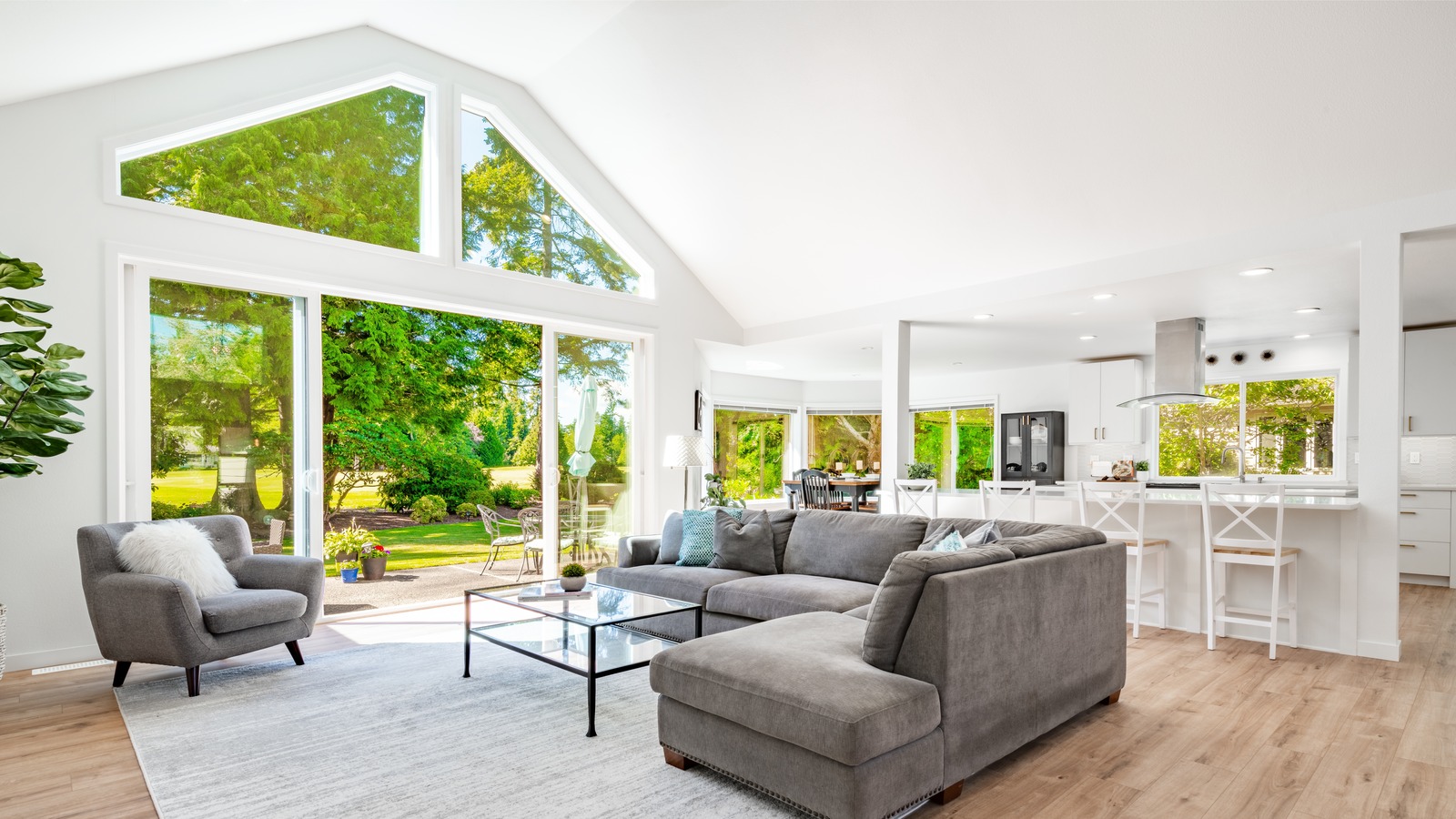
Proper lighting transforms a sloped ceiling from a potential problem into a stunning focal point, as seen in this bright, open-concept living area with balanced recessed and chandelier lighting.
Understanding Your Slope: Pitch Matters
Ceiling pitch is measured in rise-over-run (e.g., 6/12 means 6 inches rise for every 12 inches run).
- Low Slope (0/12 to 3/12 or 0–15°): Almost flat. Standard recessed or semi-flush fixtures often work with minor adjustments.
- Medium Slope (4/12 to 8/12 or 15–35°): Most common in vaulted rooms. Requires sloped trims or gimbals.
- Steep Slope (9/12+ or 35°+): Cathedral or A-frame styles. Needs high-tilt gimbals (35–45° adjustment) or fully adjustable solutions.
Measure your slope angle or consult your home’s blueprints before shopping. This determines whether you need sloped-ceiling adapters, adjustable gimbals, or suspension systems.

This grand vaulted living room showcases how chandeliers and recessed lights work together on steep slopes.
Top Lighting Options for Sloped Ceilings in 2026
1. Recessed Lighting with Sloped Trims or Gimbals (Most Popular & Versatile)
Recessed (can) lights are the go-to solution for clean, modern looks. For sloped ceilings:
- Sloped Ceiling Trims: Designed specifically for angles up to 45°. The trim tilts to keep the light beam perpendicular to the floor.
- Adjustable Gimbal Lights: These eyeball-style fixtures rotate 360° and tilt up to 90° in some 2026 models. They allow “cross-aiming” — lights on the left slope illuminate the right side of the room for even coverage.
- High-Tilt Gimbals: Best for steep slopes (35°+ tilt capability).
2026 Recommendations:
- POPANU or Adetu 4–6 inch gimbal LEDs (90° tilt, 5CCT selectable color temperature, dimmable).
- USAI Lighting Incline series or Lotus LED Tangra gimbal with sloped trims.
- Aim for 1000+ lumens per fixture for adequate floor-level brightness.
Pros: Minimalist appearance, no hanging parts to dust, excellent for general ambient lighting. Cons: Requires cutting into ceiling (professional installation recommended for safety and insulation).
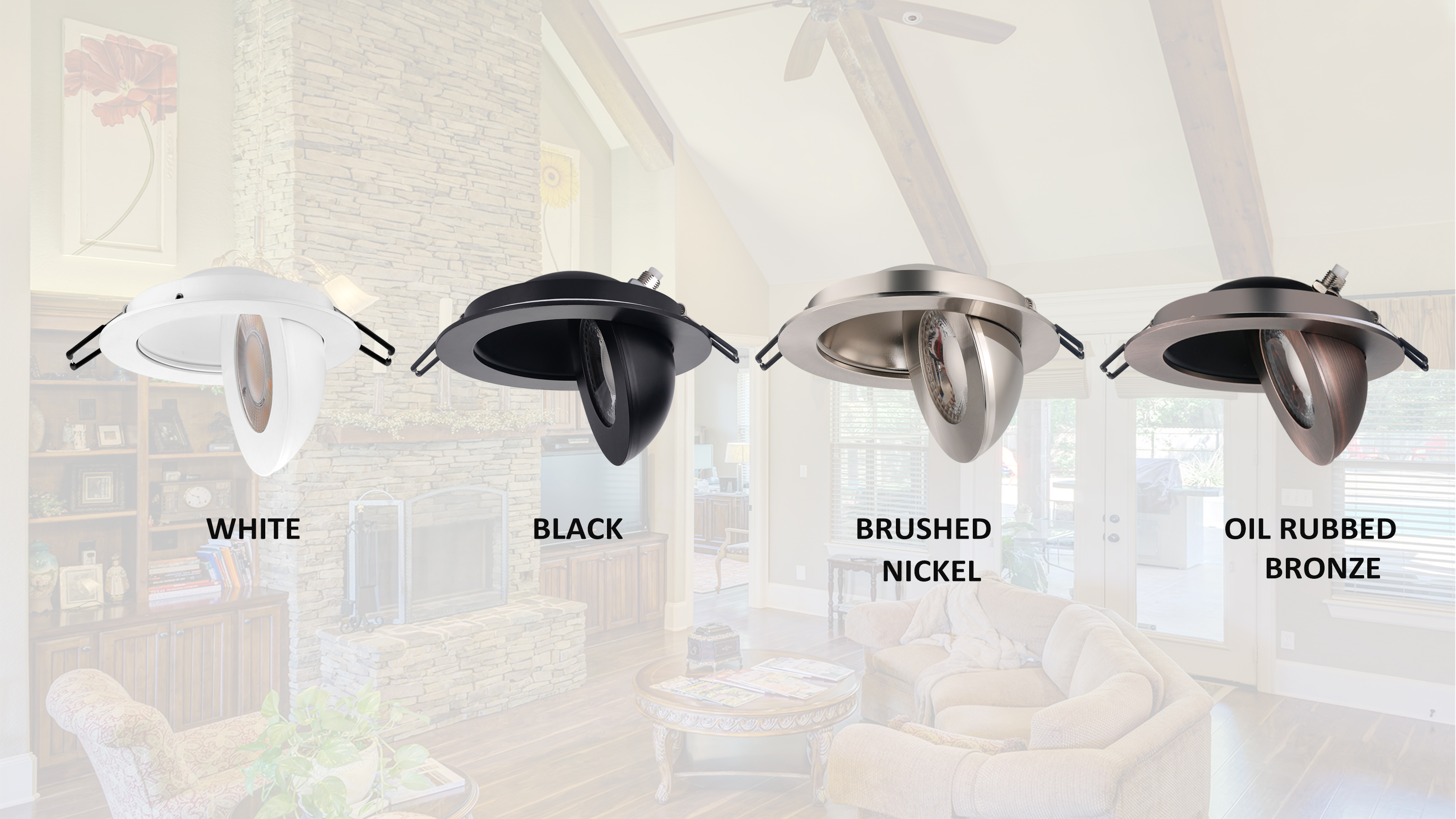
Gimbal recessed lights with adjustable tilt are among the best options for sloped ceilings, available in multiple finishes.
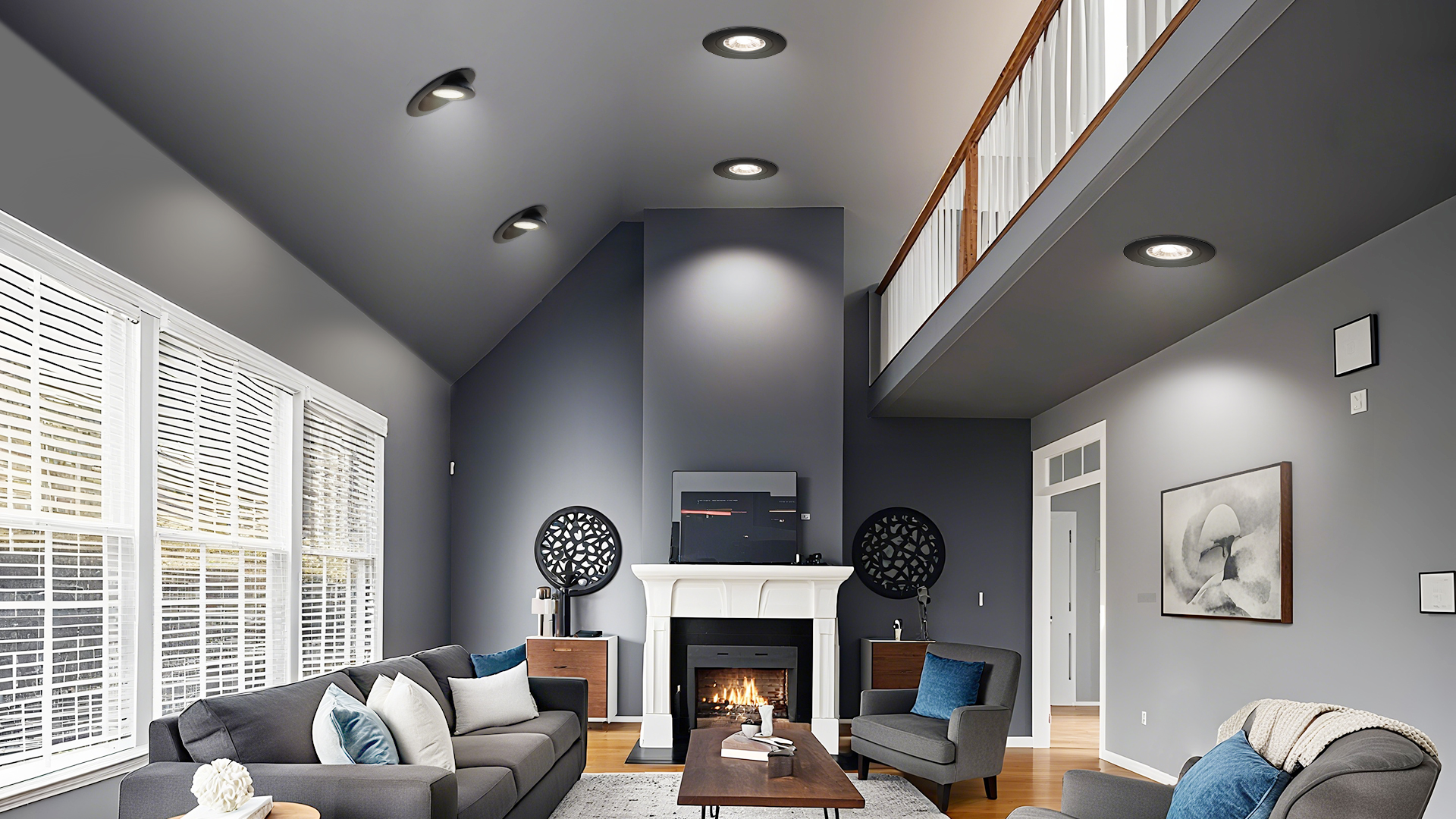
Installing recessed gimbals on a sloped ceiling provides focused, glare-free illumination.
2. Pendant Lights with Adjustable or Sloped-Compatible Canopies
Pendants shine on sloped ceilings because they hang straight down by gravity, regardless of the angle.
- Use adjustable stems, cables, or chains of varying lengths so all pendants hang at the same height from the floor.
- Sloped ceiling canopies (swivel or angled adapters) keep the mounting plate flush.
- Cluster or linear arrangements work beautifully over islands, dining tables, or reading nooks.
Best Picks for 2026:
- Modern cone or globe pendants with long adjustable cables.
- Multi-pendant fixtures designed for vaulted ceilings (ensure compatibility).
- LED-integrated options for energy efficiency and instant-on performance.
This approach grounds the room visually while highlighting the height.

Pendant lights with adjustable suspension create even illumination over kitchen islands on sloped ceilings.

Multiple pendants of varying drop lengths maintain level lighting on dramatic vaulted ceilings.
3. Track Lighting & Magnetic Track Systems
Track lighting is highly flexible for sloped ceilings.
- Install the track parallel to the slope or use suspension kits for hard slopes.
- Adjustable heads allow precise aiming.
- Magnetic track lighting (popular in 2026) offers tool-free adjustability and modern minimalist design.
Ideal for accent lighting, artwork, or task areas in living rooms and kitchens.
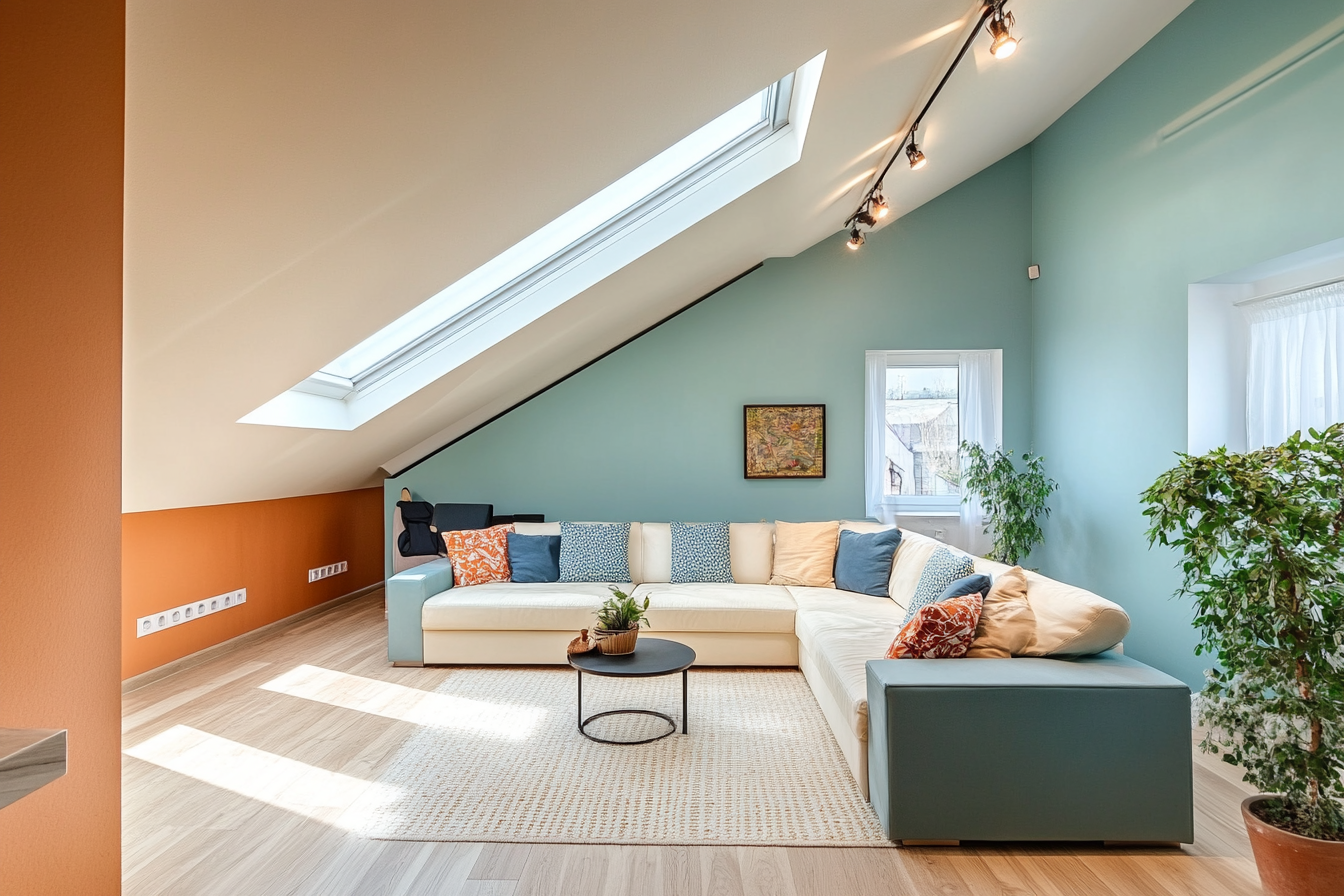
Magnetic track lighting follows the slope beautifully while providing directional control.
4. Semi-Flush Mount & Flush Mount Fixtures
For lower sloped ceilings or areas where hanging lights aren’t practical:
- Swivel or adjustable canopy semi-flush mounts.
- Low-profile LED flush mounts with crystal or diffuser designs for soft, even spread.
Great for hallways, bedrooms, and smaller rooms.
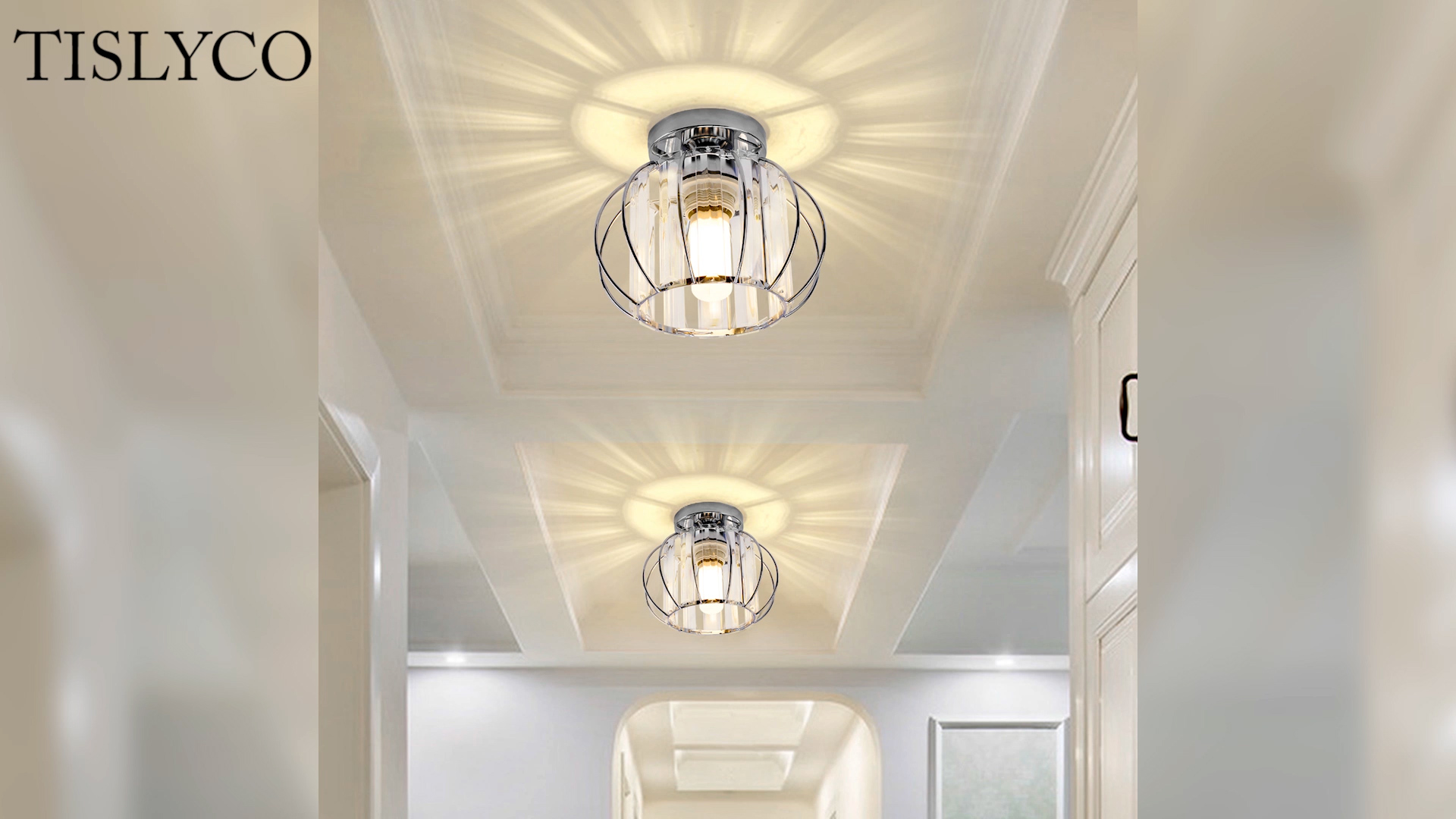
Modern semi-flush mount fixtures with swivel adapters suit low or gently sloped ceilings.
5. Chandeliers & Statement Fixtures
Large chandeliers add drama but need careful placement.
- Use sloped ceiling adapters or longer chains/stems.
- Position the fixture so that it hangs level and doesn’t obstruct views or walkways.
Combine with recessed lighting for a layered effect.

A statement chandelier paired with pendants enhances the rustic charm of exposed beams on a sloped ceiling.
6. Wall Sconces, Floor Lamps & Uplighting
Don’t rely on ceiling lights alone. Layering is essential:
- Wall sconces wash light upward along the slope.
- Tall floor lamps and table lamps provide task and ambient light at lower levels.
- LED strip lights or cove lighting along the peak highlight architecture.
Layered Lighting Strategy for Sloped Ceilings
The best lighting plans use three layers:
- Ambient — Recessed or track for overall brightness.
- Task — Pendants over counters/tables, adjustable spots for reading.
- Accent — Sconces, uplights, or narrow-beam recessed to highlight beams, artwork, or texture.
Use 2700K–3000K warm white for cozy living areas and 4000K neutral for kitchens/offices. Dimmable LEDs (5CCT selectable in many 2026 models) allow mood control.
Room-by-Room Recommendations
- Living Room / Great Room: Recessed gimbals + large chandelier + floor lamps.
- Kitchen: Linear or cluster pendants over island + recessed/task lighting.
- Dining Area: Adjustable multi-pendants or chandelier.
- Bedroom: Semi-flush or low pendants + wall sconces for soft ambiance.
- Hallway / Entry: Semi-flush mounts or track following the slope.
Installation Tips & Common Mistakes to Avoid
- Hire a licensed electrician for recessed work, especially with insulation (IC-rated fixtures required).
- Use sloped ceiling adapters or swivel canopies.
- Test layouts with temporary fixtures or lighting software.
- Avoid placing all lights on one side of the slope.
- Ensure minimum clearance for safety and aesthetics.
Common mistakes: Using non-adjustable recessed lights (causes shadows), hanging pendants at uneven heights, or ignoring dimming compatibility.

Visual diagrams help ensure pendants hang evenly despite the slope.
Energy Efficiency & Smart Lighting in 2026
LEDs dominate recommendations: 75–90% more efficient than incandescents, 25,000+ hour lifespan, and cool-running. Look for Energy Star, dimmable, and smart-compatible options (Philips Hue, GE Cync, or built-in Wi-Fi).
Smart systems let you adjust color temperature and brightness via app or voice, perfect for high ceilings where manual switches are inconvenient.
Cost Considerations & ROI
Initial costs vary: recessed gimbal kits ($20–$80 per light), quality pendants ($100–$500+), professional installation ($200–$800+). Savings come quickly through lower energy bills and fewer replacements. A well-lit sloped ceiling also increases home value and daily comfort.
Conclusion: Illuminate Your Sloped Ceiling Beautifully
The best lighting for a sloped ceiling in 2026 combines adjustable recessed gimbals, thoughtfully suspended pendants, flexible track systems, and layered ambient/task/accent sources. Prioritize fixtures designed for angles, use LEDs for efficiency, and plan for even downward illumination while celebrating the architecture.
Start by assessing your slope pitch and room function, then mix 2–3 fixture types for depth. With the right setup, your sloped ceiling will feel bright, balanced, and breathtaking instead of challenging.
Ready to upgrade? Measure your space, check compatibility, and consult a lighting specialist if needed. Your perfectly lit home awaits.