What is the Best Finish for outdoor wood furniture? It can bring warmth and beauty to any garden, patio, or balcony. But if you leave wood exposed to rain, sun, and wind, it will quickly lose its color and strength. Choosing the right finish is not just about looks—it’s about protecting your investment.
Many people make mistakes by picking the wrong product or skipping important steps. If you want your outdoor wood furniture to last for years, you need to understand which finishes work best, how to apply them, and what to avoid.
This guide explores the best finishes for outdoor wood furniture, compares their strengths and weaknesses, and gives advice based on both science and experience. You’ll find practical tips, product comparisons, and answers to common questions so you can confidently choose the right finish for your needs.
Why Outdoor Wood Furniture Needs Protection
Wood is a natural material. Outdoors, it faces sunlight, rain, humidity, temperature changes, and insects. If left untreated, wood can:
- Fade and lose color from UV rays
- Rot and develop mold from moisture
- Crack and warp with temperature changes
- Get damaged by bugs
Even hardwoods like teak and ipe need protection to last longer. Finishes help by:
- Blocking water and humidity
- Preventing UV damage
- Stopping mold and mildew
- Making cleaning easier
A good finish preserves both the look and strength of your furniture.
Types Of Outdoor Wood Finishes
There are many finishes available, but only some are truly suitable for outdoor use. The main categories are:
- Sealants
- Stains
- Paints
- Oils
- Varnishes
- Polyurethane
- Epoxy
Each has its own advantages and disadvantages. Let’s look at each type in detail.
Sealants
Sealants are clear products that block water and moisture. They don’t add color but create a protective layer. Most sealants are easy to apply and dry quickly.
Pros:
- Simple application
- Keeps natural wood look
- Good water resistance
Cons:
- Limited UV protection
- Needs reapplication every 1–2 years
Examples: Thompson’s WaterSeal, Minwax Clear Sealer
Stains
Stains add color and protection at the same time. Outdoor stains penetrate the wood and usually contain chemicals to resist UV rays and mold.
Pros:
- Adds color and highlights grain
- Good protection against UV and moisture
- Many color choices
Cons:
- Needs regular reapplication (every 2–3 years)
- Color can fade
Examples: Behr Premium Wood Stain, Cabot Australian Timber Oil
Paints
Paint covers wood completely, creating a thick barrier. Exterior paints are specially made to resist weather, but they hide the natural grain.
Pros:
- Strong protection against sun and rain
- Many color options
- Easy to clean
Cons:
- Covers a natural wood look
- Can chip or peel over time
- Needs careful surface prep
Examples: Benjamin Moore Exterior Paint, Sherwin-Williams Duration
Oils
Oils penetrate deep into the wood fibers. They nourish the wood and leave a soft finish. Some oils, like teak oil or tung oil, are popular for outdoor furniture.
Pros:
- Easy to apply and renew
- Keeps wood feeling natural
- Helps resist cracking
Cons:
- Lower protection against water compared to sealants
- Needs frequent reapplication (every 6–12 months)
- Limited UV protection
Examples: Watco Teak Oil, Pure Tung Oil
Varnishes
Varnishes are clear coatings that sit on top of the wood. Marine varnishes are made for boats and offer maximum outdoor protection.
Pros:
- High shine and gloss
- Excellent water and UV resistance
- Durable
Cons:
- Takes time to apply (multiple coats)
- Can become brittle and crack
- Needs sanding between coats
Examples: Epifanes Marine Varnish, Helmsman Spar Varnish
Polyurethane
Polyurethane is a tough synthetic coating. Outdoor versions are made to withstand weather and sunlight.
Pros:
- Very durable and scratch-resistant
- Good water protection
- Can be glossy or matte
Cons:
- Some versions yellow over time
- Can be slippery
- Needs careful application
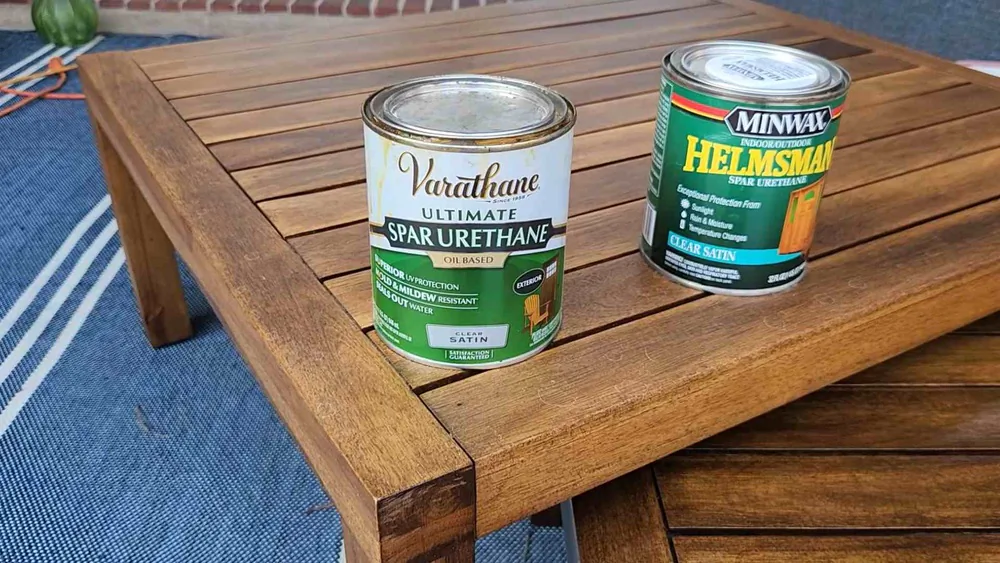
Examples: Varathane Outdoor Polyurethane, Minwax Helmsman Polyurethane
Epoxy
Epoxy is a very strong, two-part finish. It creates a thick, waterproof layer but is rarely used alone for furniture—it’s often combined with varnish.
Pros:
- Extreme water protection
- Seals wood completely
Cons:
- Needs UV protection (topcoat of varnish)
- Hard to apply
- Not flexible—can crack
Examples: West System Epoxy
Comparing Outdoor Wood Finishes
To help you choose, here is a comparison of the main finishes, focusing on outdoor durability, appearance, maintenance, and cost.
| Finish Type | Durability | Appearance | Maintenance | Cost |
|---|---|---|---|---|
| Sealant | Moderate | Natural, clear | Easy, frequent | Low |
| Stain | Good | Colored, shows grain | Moderate | Medium |
| Paint | Very Good | Solid color, hides grain | Moderate | Medium |
| Oil | Low–Moderate | Natural, matte | Frequent | Low |
| Varnish | Excellent | Glossy, clear | Moderate | Medium–High |
| Polyurethane | Excellent | Glossy or matte | Low | Medium |
| Epoxy | Excellent | Clear, thick | Low | High |
Best Finish For Outdoor Wood Furniture
With all options considered, the best finish depends on your goals:
- Do you want a natural look?
- Are you focused on maximum protection?
- How much maintenance are you willing to do?
- What is your budget?
Let’s look at the top finishes for different needs.
For Maximum Protection: Marine Varnish
Marine varnish is made for boats, so it handles water, sun, and salt. It’s perfect for outdoor wood furniture. The best brands use tung oil and UV blockers. You’ll need to apply several thin coats, but the protection lasts 2–4 years.
Key benefits:
- Best water and UV resistance
- Glossy finish
- Long-lasting
Common mistake: Many skip sanding between coats. This leads to weak bonding and early cracking.
Example: Epifanes Marine Varnish is highly rated for both performance and durability.
For Natural Look: Exterior Oil
If you want your wood to look and feel natural, choose an exterior oil like teak oil or tung oil. These oils soak into the wood and highlight the grain. They are easy to apply—just wipe on and wipe off. But they need reapplication every 6–12 months.
Key benefits:
- Matte, soft finish
- Easy maintenance
- Shows wood grain
Common mistake: Some use regular indoor oils. These don’t protect well outdoors and can lead to rot.
For Color And Grain: Outdoor Stain
Stains come in many colors and can be transparent or semi-transparent. They protect against water and UV rays. Some stains include sealers, making them a two-in-one solution.
Key benefits:
- Choice of colors
- Highlights grain
- Good protection
Example: Cabot Australian Timber Oil is popular for both color and durability.
For Complete Coverage: Exterior Paint
Paint is best if you want full color and maximum protection. Modern exterior paints are made for weather and stick well if you prepare the surface correctly.
Key benefits:
- Highest protection
- Unlimited colors
- Easy to clean
Common mistake: Skipping primer or painting on dirty wood leads to peeling.
How To Apply Outdoor Wood Finishes
Applying the finish correctly is as important as choosing the right product. Here’s a step-by-step guide for most finishes:
- Clean the wood: Remove dirt, old finish, and mold using a mild soap or wood cleaner.
- Sand the surface: Use fine sandpaper (120–220 grit) to smooth the wood and open pores. Always sand along the grain.
- Remove dust: Wipe off dust with a damp cloth.
- Apply the finish: Follow instructions for your product. Use a brush, roller, or cloth.
- Let it dry: Most finishes need several hours or overnight to dry.
- Apply more coats: For varnish or paint, add extra coats for best protection. Sand lightly between coats.
- Final cure: Wait 2–7 days before heavy use.
Pro tip: For oils, wipe off excess after 15–30 minutes to avoid sticky residue.
How Long Do Outdoor Wood Finishes Last?
The lifespan depends on:
- Product type
- Climate
- Furniture use
On average:
- Sealant: 1–2 years
- Stain: 2–3 years
- Paint: 3–5 years
- Oil: 6–12 months
- Varnish: 2–4 years
- Polyurethane: 3–5 years
- Epoxy + Varnish: 4–7 years
Furniture in hot, wet climates needs more frequent maintenance. Covering or storing furniture in winter extends finish life.
:max_bytes(150000):strip_icc()/280-Finishing-Outdoor-Projects-2000-e39d1c27f6334cf082054b38903f75cb.jpg)
Best Brands For Outdoor Wood Finishes
Some brands are known for quality and long-lasting protection. Here’s a quick comparison:
| Brand | Best Product | Type | Durability | Price Range |
|---|---|---|---|---|
| Epifanes | Marine Varnish | Varnish | Excellent | High |
| Cabot | Australian Timber Oil | Oil/Stain | Good | Medium |
| Thompson’s | WaterSeal | Sealant | Moderate | Low |
| Benjamin Moore | Exterior Paint | Paint | Very Good | Medium |
| Minwax | Helmsman Polyurethane | Polyurethane | Excellent | Medium |
Practical Tips For Long-lasting Outdoor Wood Finishes
Many people miss key steps that shorten the life of their finish. Here are some less obvious tips:
- Choose the right time: Apply finishes when humidity is low, and temperatures are between 50–80°F (10–27°C). Avoid rainy or windy days.
- Mind the edges and joints: These areas absorb more water. Apply extra finish here.
- Use quality brushes: Cheap brushes leave marks and shed hair.
- Don’t rush drying: Even if the surface feels dry, the finish needs time to harden inside.
- Store leftover food properly: Seal cans tightly and keep them in a cool, dry place.
- Test in a hidden spot: Some finishes change color or texture. Try first in a small area.
Non-obvious insight: Many finishes work best in combination. For example, using an oil first, then adding a varnish topcoat, can boost both beauty and protection. Most beginners use only one product, but professionals often layer finishes.
Wood Species And Finish Choices
Different woods need different finishes. Here are some examples:
- Teak, ipe, mahogany: Already weather-resistant. Use oil or marine varnish.
- Pine, cedar, fir: Softer woods. Need stain or paint plus sealant.
- Oak, maple: Hard but prone to water damage. Use polyurethane or varnish.
Some woods, like teak, develop a silver-gray patina if left untreated. This is not damage—it’s a natural aging process. If you prefer the original color, use oil or varnish.
Common Mistakes With Outdoor Wood Finishes
Avoid these errors:
- Skipping surface prep: Dirty or rough wood leads to peeling.
- Applying thick coats: Thin, even coats last longer.
- Ignoring drying times: Using furniture too soon weakens the finish.
- Choosing indoor products: Indoor finishes break down quickly outdoors.
- Not maintaining yearly: Even the best finish needs regular checks.
Environmental And Health Considerations
Some finishes contain strong chemicals. Always:
- Work outdoors or in a well-ventilated area.
- Wear gloves and eye protection.
- Dispose of rags safely (oil-soaked rags can catch fire).
If you want eco-friendly options, look for water-based finishes or natural oils. Some brands now offer low-VOC products.
How To Maintain Outdoor Wood Furniture
Maintenance keeps your furniture looking new and strong. Here’s a simple routine:
- Clean regularly: Use mild soap and water. Avoid harsh chemicals.
- Check for damage: Look for cracks, peeling, or mold. Fix issues early.
- Reapply finish: Follow product instructions for touch-ups.
- Cover or store: Use covers or bring furniture indoors in bad weather.
Non-obvious insight: Regular cleaning removes dirt and fungus that can break down finishes. Most people wait until there is visible damage, but prevention is easier and cheaper.
Diy Or Professional Application?
Applying finishes is usually a DIY project. However, for large or expensive furniture, hiring a professional can ensure:
- Proper surface prep
- Correct application
- Longer-lasting results
Professionals use tools like sprayers and sanders for even coats. If you’re not confident, consider expert help.
Real-world Examples
Many hotels and restaurants use marine varnish or exterior paint for their outdoor wood furniture. This is because these finishes handle heavy use and frequent cleaning. Homeowners with teak benches often use oil for easy maintenance.
A study from the University of Minnesota found that marine varnish and polyurethane lasted longest in outdoor tests, with paint also performing well. Oils and stains, while easy to apply, needed more frequent attention.
How To Choose The Best Finish For Your Furniture
Ask yourself:
- What is the wood type?
- Is the furniture exposed to sun, rain, or snow?
- Do you want a clear, colored, or natural look?
- How much maintenance can you do?
- What is your budget?
If you want maximum protection and don’t mind a glossy look, choose marine varnish or polyurethane. If you prefer a natural feel and easy upkeep, use oil. For color, use exterior paint or stain.
Frequently Asked Questions
What Is The Best Finish For Outdoor Wood Furniture In Rainy Climates?
The best finish for wet areas is marine varnish or epoxy plus varnish. These finishes block water and resist mold. Exterior paint also works well if you want full coverage. Oils work for water-resistant woods like teak, but need frequent reapplication.
How Often Should I Reapply Outdoor Wood Finishes?
It depends on the finish and climate. Oils need reapplication every 6–12 months. Stains last 2–3 years. Varnish and polyurethane can last 2–5 years. Always check for signs of wear and touch up as needed.
Can I Use Indoor Wood Finishes Outdoors?
No. Indoor finishes break down quickly in the sun and rain. They lack UV and water protection. Always use products labeled for exterior use.
How Do I Remove Old Finish Before Applying A New One?
First, clean the wood. Use sandpaper or a chemical stripper to remove the old finish. Sand smooth and wipe off dust. Then apply the new finish following the manufacturer’s instructions.
Is There A Finish That Does Not Change The Color Of Wood?
Clear sealants and water-based polyurethane change the color very little. Oils and stains highlight the grain and may deepen color. Always test in a hidden area first.
Outdoor wood furniture is a beautiful addition to any space, but only if protected properly. The right finish depends on your wood type, climate, and personal style. Remember, preparation and maintenance matter as much as the product you choose. If you follow the advice in this guide, your furniture will look great and last for years. For more details on wood finishes and maintenance, you can explore the information on Wikipedia. The effort you invest now will pay off every season you relax outdoors.