What Are the Best Light Bulbs for Ceiling Fans? Your Ultimate 2026 Buying Guide
Ceiling fans do more than just circulate air—they’re a stylish, functional centerpiece in bedrooms, living rooms, kitchens, and patios. But the light kit on your fan can make or break the entire experience. Choose the wrong bulb, and you’ll deal with dim lighting, buzzing sounds, flickering when the fan spins, excessive heat buildup, or bulbs that burn out faster than expected. In 2026, with energy costs rising and smart home tech everywhere, picking the best light bulbs for ceiling fans isn’t just about brightness anymore. It’s about efficiency, longevity, safety, and seamless integration with your fan’s design and controls.

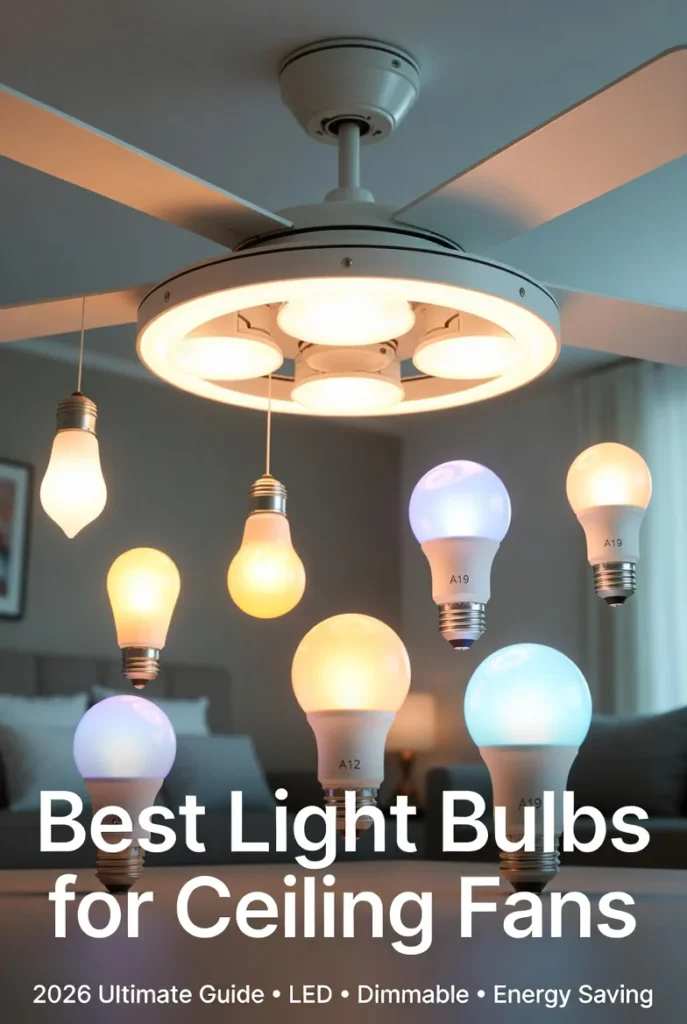
Modern ceiling fans like this brushed-nickel model with integrated LED lighting show how far the technology has come. Today’s top bulbs deliver crisp, even illumination while using a fraction of the power of older options. Whether you have a classic pull-chain fan, a remote-controlled model, or a smart fan linked to Alexa or Google Home, the right bulb transforms your space from “meh” to magazine-worthy.
In this comprehensive 2,500-word guide, we’ll break down everything you need to know: the different bulb types, critical factors like socket size and heat output, top recommendations based on 2026 reviews, installation tips, energy savings calculations, and common pitfalls. By the end, you’ll confidently shop for bulbs that fit perfectly, last for years, and enhance both your comfort and your utility bill.
Why Bulb Choice Matters More for Ceiling Fans Than Table Lamps
Ceiling fans present unique challenges that standard household bulbs often can’t handle. The fan’s blades create constant vibration, which can loosen traditional filaments or cause CFLs to fail prematurely. Many light kits are enclosed in small glass globes or shades, trapping heat and shortening bulb life if the bulb runs hot. Sockets are frequently smaller (E12 candelabra base instead of the standard E26 medium base), and the height clearance is limited—bulbs that stick out too far look awkward or won’t fit at all.
Plus, ceiling fan lights are often controlled by the same wall switch or remote as the fan motor, meaning dimmability and instant-on performance are essential. Older incandescent bulbs waste energy as heat (up to 90% of their power), making the room feel stuffy when the fan is running. Compact fluorescents (CFLs) contain mercury and take time to warm up, which feels clunky in a fan setup.
LED bulbs have become the undisputed champion in 2026. They run cool, last 25,000+ hours, use 75-90% less energy, and come in fan-rated versions specifically engineered for vibration. Smart LEDs add app control, color temperature adjustments, and voice commands without rewiring. According to recent testing from sources like CNET and Wirecutter, LED options now outperform every other type in brightness consistency, color rendering, and reliability.
Understanding Your Ceiling Fan’s Light Kit: Sockets, Shapes, and Constraints
Before buying any bulb, check your fan’s manual or inspect the socket. Most modern fans use one of two bases:
- E26 Medium Base: Common in larger light kits or fans with multiple sockets. These accept standard A19 or BR30 shapes.
- E12 Candelabra Base: The most frequent in decorative ceiling fans with 2–4 small bulbs. Look for B10, B11, or torpedo-shaped LEDs here.
Shape matters too. A19 bulbs are the classic pear shape (about 2.4 inches wide). For tight globes, choose torpedo (B11) or globe (G16.5) styles that stay compact. Wattage ratings on the fan (often 40W or 60W max per socket) are critical—exceeding them risks fire or motor strain, even with LEDs. Always match the lumen output to your needs: 800+ lumens per bulb for general room lighting, 400–600 for ambient mood lighting.
Many 2026 fans now feature integrated LED modules that never need replacing, but for traditional kits, replaceable bulbs remain the norm. Hunter Fan Company and other brands emphasize matching bulb type exactly to avoid warranty issues.
Key Factors to Consider When Choosing Bulbs for Ceiling Fans
Selecting the best light bulbs for ceiling fans requires balancing five core criteria:
- Size and Fit: Measure the globe’s interior height and diameter. A bulb taller than 4 inches or wider than 2 inches usually won’t work in enclosed fixtures. Fan-rated LEDs are designed to be shorter and sleeker.
- Base Type and Wattage Equivalent: Confirm E12 or E26. A 60W incandescent equivalent LED uses only 8–9W but delivers 800 lumens. Check the fan’s max wattage sticker—LEDs stay safely under limits while providing more light.
- Color Temperature (Kelvin):
- 2700K–3000K (warm white): Cozy for bedrooms and living rooms.
- 4000K (neutral/daylight): Crisp for kitchens and home offices.
- 5000K+: Too clinical for most fans unless you want a modern, energizing vibe.
- Dimmability and Compatibility: Not all LEDs dim smoothly. Look for “dimmable” labels and test with your fan’s remote or wall dimmer to avoid flicker or buzzing. Smart bulbs add scene modes and scheduling.
- Additional Features:
- Vibration Resistance: Fan-rated bulbs have reinforced filaments or solid-state LEDs that withstand shaking.
- Heat Output: LEDs stay cool, preventing globe yellowing or fan motor stress.
- Lifespan & CRI (Color Rendering Index): Aim for 25,000+ hours and CRI 90+ for natural colors.
- Smart Capabilities: Wi-Fi or Bluetooth bulbs like Philips Wiz integrate with remotes and apps.
Energy Star certification ensures real-world savings. In 2026, many bulbs also offer tunable white or color-changing options for mood lighting.
Types of Light Bulbs: Pros, Cons, and Why LEDs Win for Ceiling Fans
Let’s compare the major options head-to-head.
Incandescent Bulbs: Classic warm glow, cheap upfront. But they burn hot, use massive energy (60W for 800 lumens), last only 1,000–1,200 hours, and fail quickly under vibration. Banned or phased out in many regions for inefficiency.
Halogen Bulbs: Slightly more efficient (15% less energy) and brighter, but still run very hot and last just 2,000 hours. Not ideal for enclosed fan globes.
CFLs (Compact Fluorescent): Better efficiency (14W for 800 lumens) and 8,000-hour lifespan, but they contain mercury (environmental hazard if broken), take 30–60 seconds to brighten, and hum or flicker with fan motion. Rarely recommended in 2026.
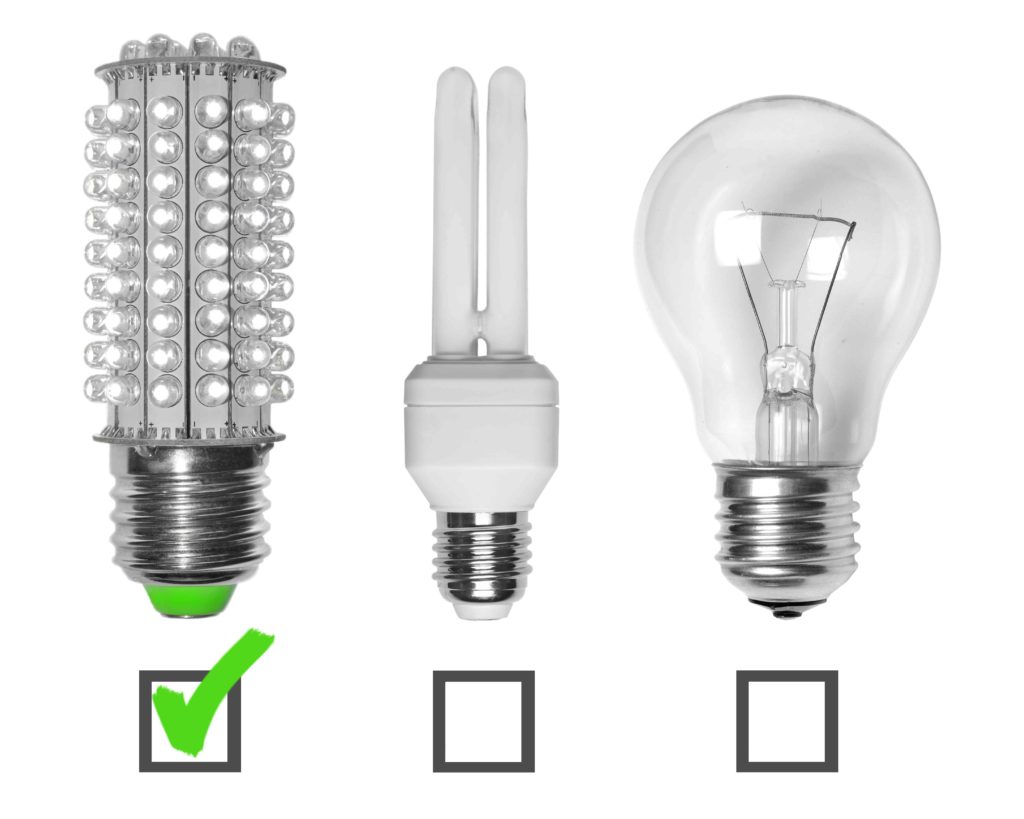
LED Bulbs: The clear winner. Use 7–9W for 800 lumens, last 25,000+ hours (25 years of daily use), run cool, turn on instantly, and are fully dimmable. Fan-specific LEDs are shatter-resistant and vibration-proof. Modern options achieve CRI 95+ for perfect color accuracy.
Integrated LED Fixtures: No bulbs to replace—modules last 50,000 hours. Popular in premium 2026 fans from brands like Modern Forms. Great for low-maintenance, but less flexible if you want to change color temperature later.
Bottom line: LEDs save $100+ per fan over five years in electricity alone while delivering superior performance.
Top Recommended Light Bulbs for Ceiling Fans in 2026
Here are the standouts based on recent reviews, Amazon best-sellers, and expert tests.

Best for E12 Candelabra Sockets (Most Common in Decorative Fans)
- MAXvolador E12 LED Candelabra Bulbs (60W Equivalent, Daylight): Top-rated in 2025 roundups. 560 lumens, 5000K, non-dimmable but ultra-bright and compact. Pack of 12 under $20. Perfect vibration resistance; users report zero failures after 18 months of fan use.
- LOHAS E12 Dimmable Candelabra LED Bulbs: 2700K warm white, smooth dimming with most fan remotes. Excellent for bedrooms.
- SikSog E12 Torpedo Bulbs (50W Equivalent): 560 lumens, 5000K, 12-pack. Slim profile fits tiny globes.
Best for E26 Medium Base or Larger Kits
- Feit Electric Bright White Dimmable A19 LEDs: Wirecutter and Spruce pick for 2025–2026. 800+ lumens, perfect color rendering, flicker-free dimming.
- Philips Wiz B12 Smart White Bulbs: App-controlled, voice-compatible, color-changing. Ideal for smart fans.
- SYLVANIA LED TruWave Natural Series: High CRI (95+), natural daylight feel. Great for task lighting.
Premium Smart Options
- GE Cync BR30 or Full-Color Direct Connect: Works without a hub, excellent for high ceilings or open fans.

- Hansang E26 Ceiling Fan Bulbs: 4000K natural white, appliance-grade durability.
For enclosed fixtures, prioritize “fan-rated” or “vibration-resistant” labels from Home Depot or Emery Allen.
Installation and Maintenance Tips for Long-Lasting Performance
Turn off power at the breaker. Unscrew old bulbs carefully—vibration can make them stick. Clean the globe with a microfiber cloth (no harsh chemicals). Insert new LEDs gently; never force. If your fan has a remote, pair smart bulbs via the app first. Test dimming at low speed to check for issues.
Maintenance is minimal with LEDs: dust the fan blades quarterly. Expect 20+ years before replacement.

Energy Savings, Environmental Impact, and ROI
Switching four 60W incandescents to 9W LEDs in a single fan saves about 200 kWh/year—$30–50 on your bill. Over 25,000 hours, you avoid buying 20+ replacement bulbs and reduce CO₂ emissions dramatically.
Common Mistakes to Avoid and FAQs
- Mistake 1: Buying non-dimmable LEDs with a dimmer switch (causes buzzing).
- Mistake 2: Ignoring base size—E12 vs E26 is a common return reason.
- Mistake 3: Over-tightening bulbs in vibration-prone fans.
FAQs:
- Can I use regular LEDs? Only if fan-rated and size-appropriate.
- Are smart bulbs compatible? Yes, with most 2026 remotes.
- Brightest option? 800–1100 lumen LEDs (60–75W equivalent).
Conclusion: Upgrade to LEDs and Enjoy the Glow
The best light bulbs for ceiling fans in 2026 are, without question, high-quality, fan-rated LEDs. They deliver perfect brightness, zero hassle, massive savings, and future-proof smart features. Whether you choose budget MAXvolador candelabras or premium Philips Wiz smart bulbs, you’ll wonder why you waited so long.